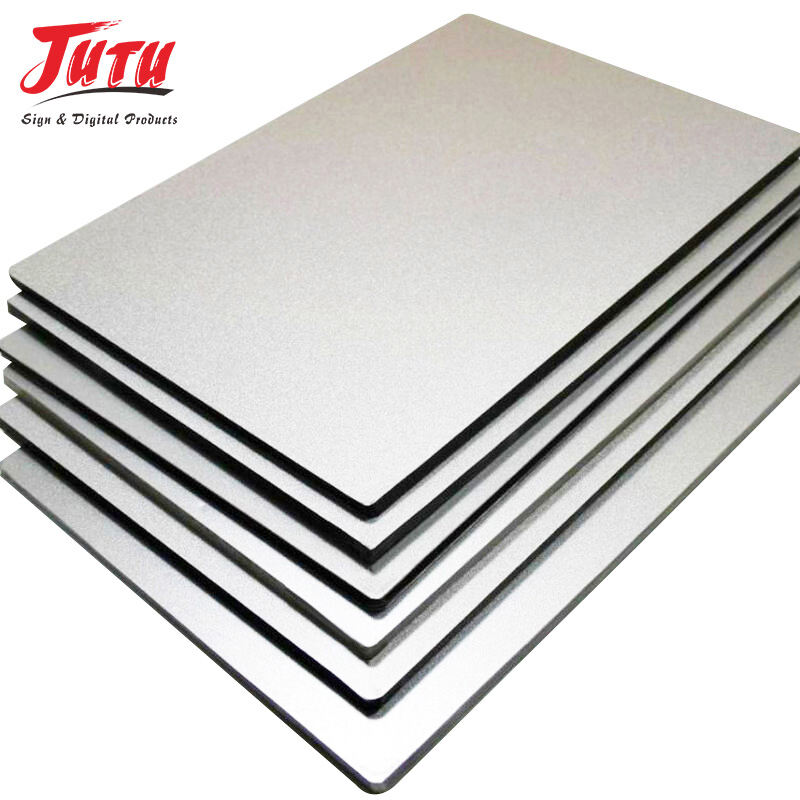
wood grain aluminum composite panel
Wood grain aluminum composite panel represents a revolutionary fusion of modern engineering and natural aesthetics, delivering the timeless beauty of wood with the superior performance characteristics of aluminum construction. This innovative building material consists of two aluminum sheets bonded to a polyethylene core, with an advanced surface treatment that replicates authentic wood textures and patterns with remarkable precision. The wood grain aluminum composite panel manufacturing process employs state-of-the-art digital printing technology and specialized coating techniques to achieve photorealistic wood appearances that capture every detail, from subtle grain variations to natural color gradations. The primary functions of wood grain aluminum composite panel encompass both structural and decorative applications, serving as exterior cladding systems, interior wall panels, signage substrates, and architectural accent features. The technological backbone of wood grain aluminum composite panel lies in its multilayer construction, where the aluminum faces provide exceptional strength-to-weight ratios while the polymer core delivers thermal insulation properties and sound dampening capabilities. Advanced surface treatments including fluorocarbon coatings and protective laminations ensure long-term color stability and resistance to environmental factors such as UV radiation, moisture penetration, and thermal cycling. The wood grain aluminum composite panel finds extensive applications across commercial buildings, residential developments, retail environments, hospitality projects, and transportation infrastructure. Architects and designers frequently specify wood grain aluminum composite panel for facades, canopies, column covers, ceiling systems, and interior partitions where the natural warmth of wood appearance is desired without the maintenance requirements of genuine timber. The versatility of wood grain aluminum composite panel extends to custom fabrication possibilities, allowing for precise cutting, routing, bending, and forming operations to accommodate complex architectural geometries and design specifications while maintaining structural integrity throughout the installation process.
 EN
EN