 EN
EN

Modern manufacturing industries continuously seek materials that offer exceptional strength-to-weight ratios while maintaining cost-effectiveness and environmental sustainability. Paper foam board has emerged as a revolutionary solution in lightweight design applications, combining the structural integrity needed for demanding applications with the environmental benefits of recyclable materials. This innovative composite material represents a significant advancement in sustainable engineering, offering designers and manufacturers unprecedented flexibility in creating lightweight yet durable products across multiple industries.
Material Composition and Manufacturing Process
Core Structure Analysis
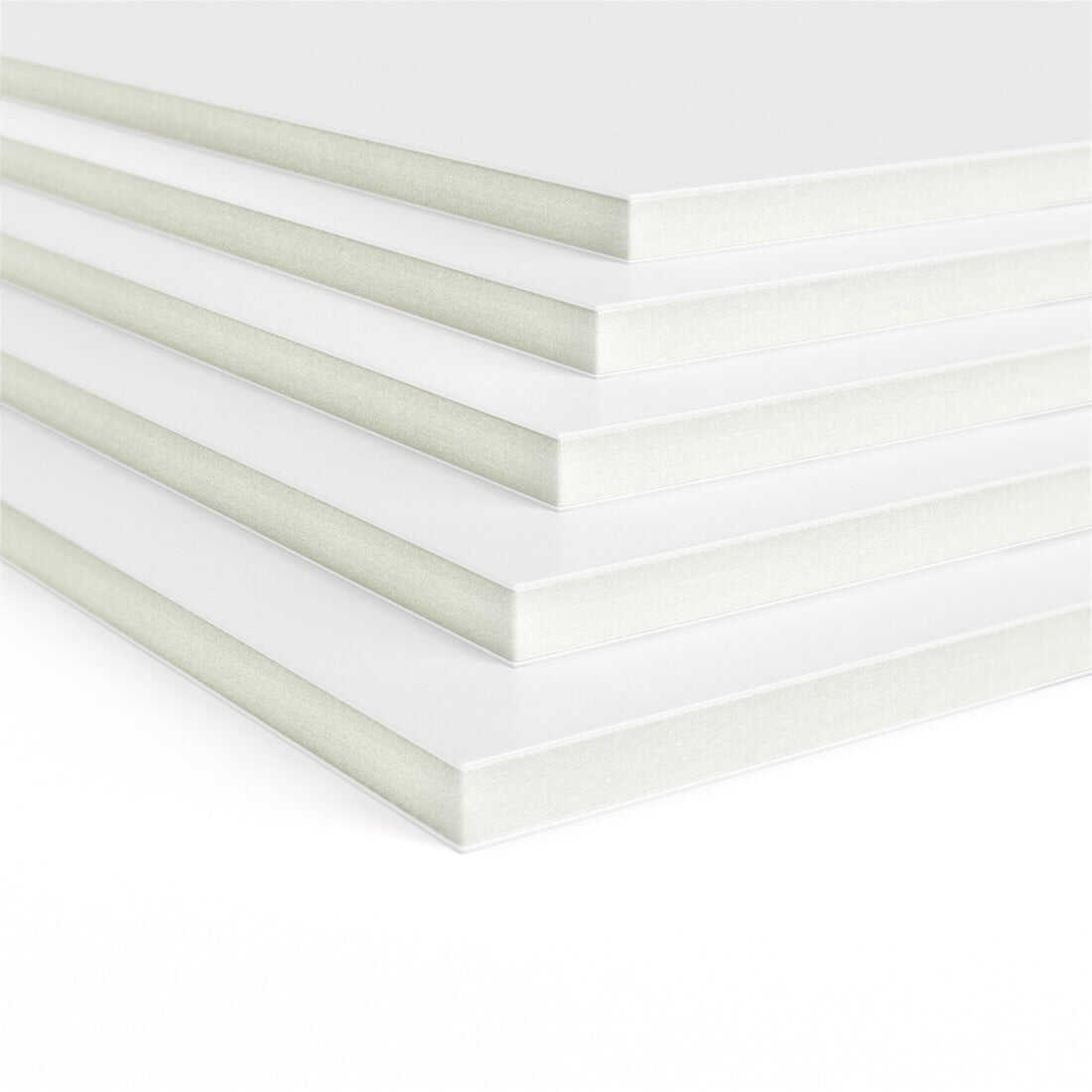
The fundamental structure of paper foam board consists of a lightweight foam core sandwiched between two layers of high-quality paper or cardboard facing materials. This tri-layer construction creates an exceptionally efficient structural system where the foam core provides dimensional stability and compression resistance while the paper facings contribute tensile strength and surface durability. The foam core typically comprises expanded polystyrene or polyurethane, engineered to specific density requirements that optimize both weight reduction and structural performance.
Manufacturing processes for paper foam board involve precision lamination techniques that ensure uniform adhesion between the core and facing materials. Advanced production facilities utilize controlled temperature and pressure systems to create consistent bond strength throughout the entire panel surface. Quality control measures during manufacturing include density verification, adhesion testing, and dimensional accuracy assessments to guarantee that each paper foam board meets stringent performance specifications required for lightweight design applications.
Raw Material Selection Criteria
The selection of raw materials for paper foam board production significantly impacts the final product's structural properties and environmental profile. High-grade recycled paper fibers are often incorporated into the facing materials, providing excellent surface characteristics while supporting sustainability objectives. The foam core materials undergo rigorous testing to ensure compatibility with paper substrates and to verify long-term dimensional stability under varying environmental conditions.
Adhesive systems used in paper foam board construction must provide permanent bonding while maintaining flexibility to accommodate thermal expansion and contraction cycles. Modern formulations utilize environmentally friendly bonding agents that eliminate volatile organic compounds while delivering superior adhesion performance. These carefully selected materials work synergistically to create a composite structure that exceeds the performance capabilities of individual components.
Mechanical Properties and Performance Characteristics
Flexural Strength and Stiffness
Paper foam board exhibits exceptional flexural properties that make it ideal for applications requiring high stiffness-to-weight ratios. Laboratory testing demonstrates that these materials can achieve flexural strengths exceeding 2.5 MPa while maintaining weights significantly lower than traditional solid materials. The sandwich construction principle allows paper foam board to distribute loads efficiently across the entire panel thickness, maximizing structural efficiency and minimizing material usage.
Stiffness characteristics of paper foam board are particularly noteworthy in beam applications where deflection control is critical. The high moment of inertia created by the sandwich structure enables thin panels to resist bending loads that would require much thicker solid materials. This property makes paper foam board an excellent choice for architectural panels, furniture components, and structural elements in lightweight assemblies.
Compressive Strength and Load Distribution
Compressive strength testing reveals that paper foam board can withstand substantial normal loads while maintaining structural integrity. The foam core's cellular structure distributes compressive forces uniformly across the panel surface, preventing localized failure modes that could compromise overall performance. Testing protocols following industry standards demonstrate consistent compressive strength values that support reliable design calculations for engineering applications.
Load distribution characteristics of paper foam board enable efficient transfer of concentrated forces to supporting structures. The facing materials spread point loads across larger areas of the foam core, reducing stress concentrations and improving overall durability. This load distribution capability makes paper foam board particularly suitable for applications involving equipment mounting, display systems, and temporary structural elements where concentrated loading conditions are common.
Applications in Lightweight Design Solutions
Architectural and Construction Applications
The construction industry has embraced paper foam board as an innovative solution for lightweight building components that reduce overall structural loads while maintaining required performance standards. Exterior cladding systems incorporating paper foam board achieve excellent thermal insulation properties while significantly reducing the weight burden on building frameworks. These applications demonstrate how modern materials can simultaneously address multiple design objectives including energy efficiency, structural performance, and construction cost optimization.
Interior partition systems utilizing paper foam board provide exceptional acoustical performance while enabling rapid installation and modification capabilities. The material's workability allows for precise cutting and fitting using standard construction tools, reducing installation time and labor costs. Fire-rated versions of paper foam board meet building code requirements for interior applications, ensuring compliance with safety regulations while delivering superior performance characteristics.
Industrial and Manufacturing Uses
Manufacturing industries utilize paper foam board in diverse applications ranging from packaging solutions to production tooling and temporary fixtures. The material's dimensional stability and surface quality make it ideal for creating custom packaging systems that protect sensitive products during shipping while minimizing packaging weight and material costs. Electronics manufacturers particularly value paper foam board for anti-static packaging applications where product protection and weight reduction are equally important.
Production tooling applications leverage paper foam board's machinability and structural properties to create lightweight jigs, fixtures, and assembly aids. The material can be precisely machined using conventional woodworking tools while providing sufficient strength and durability for repetitive manufacturing operations. Automotive and aerospace industries employ paper foam board in prototype development where rapid iteration and cost-effective testing are essential for product development success.
Environmental Impact and Sustainability Benefits
Recyclability and Waste Reduction
Paper foam board contributes significantly to environmental sustainability through its recyclable composition and reduced material consumption compared to traditional alternatives. The paper facing materials can be processed through standard paper recycling streams, while foam cores can be mechanically recycled into new foam products or alternative applications. This closed-loop approach to material utilization aligns with circular economy principles and corporate sustainability initiatives.
Waste reduction benefits of paper foam board extend beyond end-of-life considerations to include manufacturing efficiency and installation waste minimization. The material's precise cutting characteristics reduce trim waste during fabrication, while its lightweight properties decrease transportation fuel consumption and associated carbon emissions. Life cycle assessments consistently demonstrate lower environmental impacts for paper foam board compared to equivalent solid materials across multiple impact categories.
Energy Efficiency and Carbon Footprint
Manufacturing processes for paper foam board require significantly less energy compared to traditional materials such as solid wood panels or metal sheets. The low-temperature lamination processes and minimal processing requirements result in reduced manufacturing carbon footprints while maintaining high production efficiency. Renewable energy integration in manufacturing facilities further enhances the environmental profile of paper foam board production.
Transportation efficiency gains from paper foam board's lightweight characteristics translate directly into reduced fuel consumption and carbon emissions throughout the supply chain. The material's high strength-to-weight ratio enables larger quantities to be shipped in standard transportation equipment, improving logistics efficiency while reducing per-unit environmental impacts. These benefits compound throughout the product lifecycle, making paper foam board an environmentally responsible choice for sustainable design applications.
Design Optimization and Engineering Considerations
Structural Analysis and Calculation Methods
Structural design with paper foam board requires specific analytical approaches that account for the material's composite nature and unique failure modes. Sandwich panel theory provides the foundation for calculating flexural stiffness and strength values, while additional considerations for shear deformation and local buckling ensure conservative and reliable design outcomes. Engineering software packages now include specific material models for paper foam board that enable accurate structural analysis and optimization.
Design optimization techniques for paper foam board focus on maximizing structural efficiency while minimizing material usage and weight. Finite element analysis enables detailed stress distribution evaluation and identification of optimal thickness configurations for specific loading conditions. These analytical tools support iterative design processes that achieve target performance levels while maintaining cost-effectiveness and sustainability objectives.
Connection Details and Assembly Methods
Successful implementation of paper foam board in lightweight designs requires careful attention to connection details and assembly methods that preserve the material's structural integrity. Mechanical fastening systems must distribute loads appropriately to prevent local crushing or tear-out failures in the facing materials. Specialized fasteners designed for composite panels provide optimal holding power while minimizing stress concentrations that could compromise long-term performance.
Adhesive bonding techniques offer alternative connection methods that can achieve continuous load transfer and improved structural efficiency. Structural adhesives compatible with paper foam board substrates enable the creation of complex assemblies with minimal weight penalty and excellent durability characteristics. Proper surface preparation and curing procedures ensure reliable bond performance that meets or exceeds mechanical fastening alternatives in many applications.
Quality Control and Testing Standards
Performance Verification Protocols
Comprehensive quality control programs for paper foam board include standardized testing procedures that verify mechanical properties, dimensional accuracy, and durability characteristics. Flexural testing according to industry standards provides fundamental strength and stiffness data essential for structural design calculations. Compression testing evaluates the core material's ability to resist normal loads without excessive deformation or failure.
Environmental testing protocols subject paper foam board samples to accelerated aging conditions that simulate long-term exposure to temperature cycling, humidity variations, and other environmental factors. These tests ensure that material properties remain within acceptable limits throughout the intended service life. UV exposure testing is particularly important for applications where paper foam board may be subjected to direct sunlight or artificial lighting conditions.
Industry Standards and Certification Requirements
Paper foam board products must comply with relevant industry standards that establish minimum performance requirements and testing methodologies. International standards organizations have developed specific testing protocols for sandwich panel materials that ensure consistent quality and performance across different manufacturers. Certification programs provide third-party verification of compliance with these standards, giving designers and specifiers confidence in material performance.
Building code compliance requirements vary by application and geographic location, necessitating careful selection of paper foam board products that meet specific regulatory requirements. Fire safety testing, structural performance verification, and environmental impact assessments may be required depending on the intended use. Manufacturers maintain comprehensive documentation of test results and certifications to support specification and approval processes in regulated applications.
FAQ
What are the primary advantages of paper foam board in lightweight applications
Paper foam board offers exceptional strength-to-weight ratios, making it ideal for applications where weight reduction is critical without compromising structural performance. The material provides excellent stiffness characteristics, easy workability with standard tools, and environmental sustainability through recyclable components. Additionally, paper foam board delivers cost-effective solutions compared to traditional materials while meeting demanding performance requirements across diverse industries.
How does paper foam board compare to other lightweight materials in terms of structural performance
Paper foam board demonstrates superior flexural stiffness compared to solid materials of equivalent weight, thanks to its sandwich construction principle. While materials like aluminum honeycomb may offer higher absolute strength values, paper foam board provides better cost-performance ratios and easier fabrication characteristics. The material's balanced properties make it competitive with engineered lumber products while offering better moisture resistance and dimensional stability.
What environmental benefits does paper foam board provide over conventional materials
Paper foam board contributes to environmental sustainability through multiple pathways including recyclable paper facings, reduced material consumption due to efficient structural design, and lower manufacturing energy requirements. The material's lightweight characteristics reduce transportation fuel consumption and associated carbon emissions throughout the supply chain. Life cycle assessments consistently show lower environmental impacts compared to solid wood, metal, or plastic alternatives in equivalent applications.
What design considerations are most important when specifying paper foam board
Critical design considerations for paper foam board include proper load distribution through appropriate connection details, environmental protection measures for exterior applications, and compliance with relevant building codes and industry standards. Structural analysis should account for the material's composite behavior and potential failure modes including face wrinkling and core shear. Proper specification of thickness, density, and facing materials ensures optimal performance for specific application requirements while maintaining cost-effectiveness.
Table of Contents
- Material Composition and Manufacturing Process
- Mechanical Properties and Performance Characteristics
- Applications in Lightweight Design Solutions
- Environmental Impact and Sustainability Benefits
- Design Optimization and Engineering Considerations
- Quality Control and Testing Standards
-
FAQ
- What are the primary advantages of paper foam board in lightweight applications
- How does paper foam board compare to other lightweight materials in terms of structural performance
- What environmental benefits does paper foam board provide over conventional materials
- What design considerations are most important when specifying paper foam board