Professional Laser Cutting PVC Celuka Sheet Services - Precision Manufacturing Solutions

Get a Free Quote

Our representative will contact you soon.
Email
Name
Company Name
Message
0/1000

laser cutting pvc celuka sheet

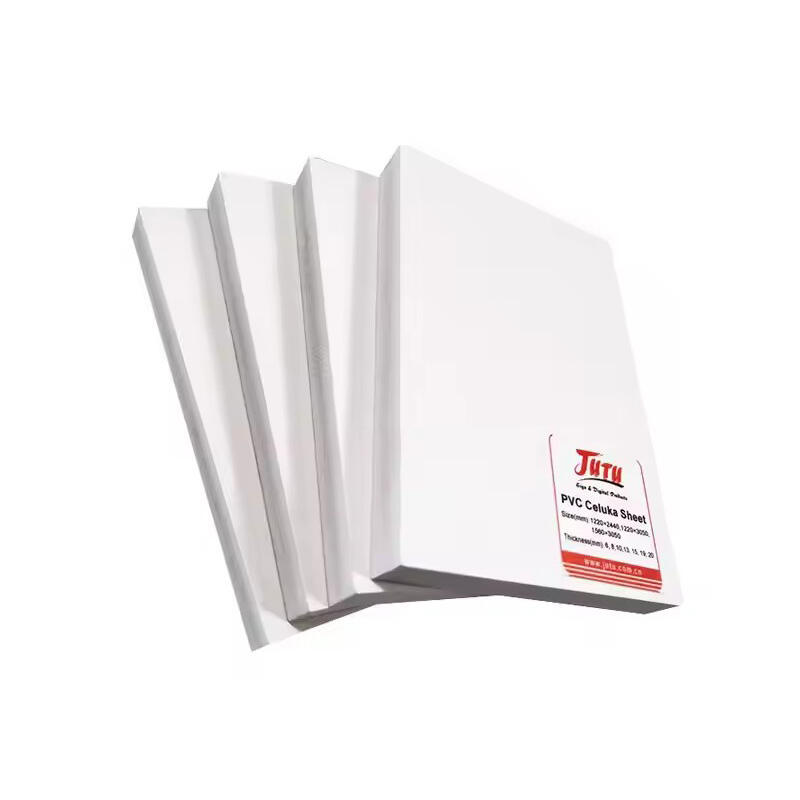
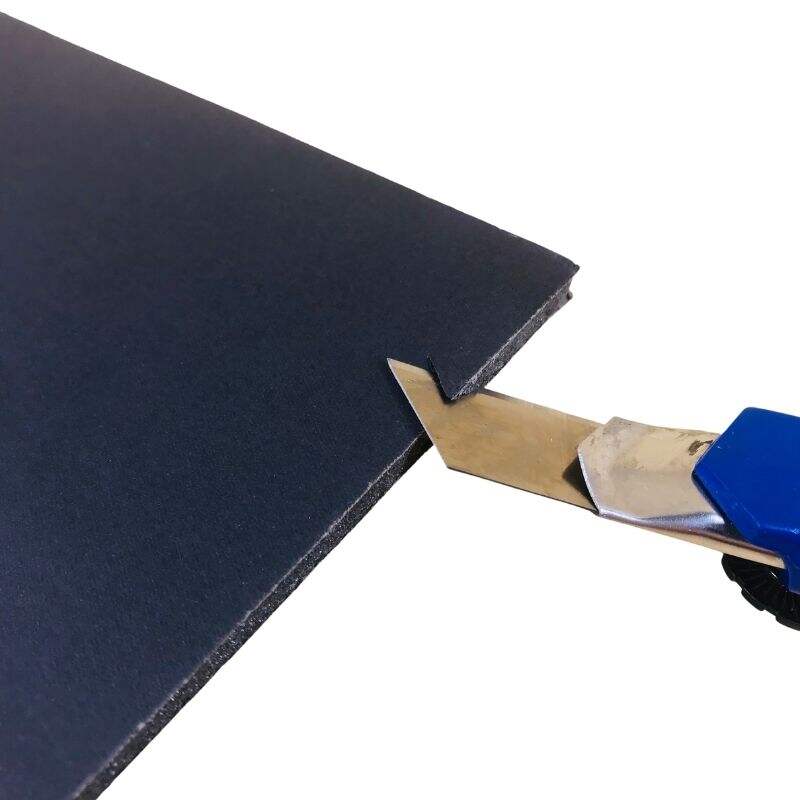
Laser cutting PVC celuka sheet represents a revolutionary manufacturing process that combines advanced laser technology with the unique properties of celuka foam boards. PVC celuka sheets are closed-cell foam boards characterized by their lightweight structure, smooth surface finish, and exceptional durability. The laser cutting process utilizes high-precision laser beams to achieve clean, accurate cuts through these versatile sheets, creating intricate designs and precise dimensions that traditional cutting methods cannot match. The main functions of laser cutting PVC celuka sheet include producing custom signage, architectural panels, decorative elements, and industrial components with remarkable precision. This technology enables manufacturers to create complex geometries, fine details, and smooth edge finishes without mechanical stress or material deformation. The laser cutting process generates minimal waste, operates at high speeds, and maintains consistent quality across large production runs. Technological features include computer-controlled cutting paths, adjustable laser power settings, and real-time monitoring systems that ensure optimal results. The process eliminates the need for physical tooling, reducing setup times and enabling rapid prototyping. Applications span across multiple industries including advertising, construction, automotive, marine, and furniture manufacturing. In the signage industry, laser cutting PVC celuka sheet creates professional displays, channel letters, and dimensional graphics. Architectural applications include wall panels, ceiling tiles, and decorative screens. The automotive sector utilizes these sheets for interior trim pieces and protective panels. Marine applications benefit from the water-resistant properties, using laser-cut components for boat interiors and exterior fittings. The furniture industry incorporates these materials for modern designs, cabinet doors, and storage solutions. The combination of laser precision and celuka material properties delivers exceptional results for demanding applications.

New Product Recommendations

Laser cutting PVC celuka sheet offers numerous compelling advantages that make it superior to conventional cutting methods. The precision achieved through laser cutting eliminates human error and ensures consistent results every time. Each cut maintains exact dimensions with tolerances as tight as 0.1mm, which proves essential for applications requiring perfect fits and professional appearances. The clean cutting action produces smooth edges without chips, cracks, or rough surfaces that typically occur with saw cutting or routing. This eliminates secondary finishing operations, reducing production time and labor costs significantly. The non-contact nature of laser cutting prevents material compression or deformation during the cutting process. Traditional methods often squeeze or crush the cellular structure of celuka sheets, compromising their integrity and appearance. Laser cutting preserves the material properties throughout the entire thickness, maintaining structural strength and surface quality. Speed advantages become apparent in complex projects where laser cutting processes intricate patterns much faster than manual or traditional automated methods. Simple geometric shapes cut in minutes, while complex designs that would take hours using conventional methods complete in a fraction of the time. The elimination of tool wear represents another significant cost advantage. Traditional cutting requires sharp blades, router bits, and other consumable tools that degrade over time and require frequent replacement. Laser cutting uses focused light energy, eliminating physical tool contact and associated replacement costs. Flexibility in design changes provides tremendous value for custom applications. Digital file modifications allow instant design updates without retooling or setup changes. This capability enables rapid prototyping, design iteration, and small batch customization that would be prohibitively expensive using traditional manufacturing methods. Material waste reduction contributes to both cost savings and environmental benefits. Laser cutting optimizes material usage through precise nesting algorithms that minimize scrap generation. The narrow kerf width of laser cutting removes less material than saw blades, maximizing yield from each sheet. Quality consistency remains uniform across production runs, regardless of operator skill levels or fatigue factors that affect manual cutting operations. Automated laser systems maintain the same precision standards from the first piece to the thousandth piece, ensuring reliable quality for large orders.

Latest News

Why Honeycomb Board Furniture is Taking the Market by Storm

07

Nov

Why Honeycomb Board Furniture is Taking the Market by Storm

Introduction to Honeycomb Board Furniture Honeycomb board furniture has rapidly gained popularity across the global furniture industry due to its combination of lightweight design, high strength, and sustainability. Made from paper, aluminum, or comp...
View More
PVC Foam Sheet Applications in Industrial Fabrication and Prototyping

23

Dec

PVC Foam Sheet Applications in Industrial Fabrication and Prototyping

Modern industrial manufacturing and prototyping demands have created an increasing need for versatile, lightweight materials that can deliver exceptional performance across diverse applications. Among these materials, PVC foam sheet has emerged as a ...
View More
PP Corrugated Sheets for Temporary Structures and Event Signage

06

Jan

PP Corrugated Sheets for Temporary Structures and Event Signage

PP corrugated sheets have emerged as a revolutionary material in the construction and signage industries, offering unparalleled versatility for temporary structures and event displays. These lightweight yet durable plastic sheets provide an ideal sol...
View More
How Aluminum Composite Panels Are Revolutionizing Skyscraper Facades

06

Jan

How Aluminum Composite Panels Are Revolutionizing Skyscraper Facades

Modern skyscraper construction has undergone a remarkable transformation, with aluminum composite panels emerging as the cornerstone of contemporary facade design. These innovative building materials combine the strength of aluminum with advanced com...
View More

Get a Free Quote

Our representative will contact you soon.
Email
Name
Company Name
Message
0/1000

laser cutting pvc celuka sheet

Superior Edge Quality and Precision Engineering

Superior Edge Quality and Precision Engineering

The laser cutting PVC celuka sheet process delivers unmatched edge quality that sets new standards in material processing excellence. Unlike traditional cutting methods that often leave rough, uneven surfaces requiring additional finishing work, laser cutting produces exceptionally smooth edges with precision that rivals injection molding quality. The focused laser beam creates a controlled heat zone that instantly vaporizes the material along the cutting path, resulting in clean, sealed edges without any mechanical stress or material displacement. This precision engineering approach ensures that every cut maintains consistent depth, angle, and surface finish across the entire project. The heat-affected zone remains minimal, typically less than 0.2mm, preserving the cellular structure and material properties right up to the cut edge. This characteristic proves particularly valuable when creating interlocking components or assemblies where precise fits are essential. The sealed edge quality also enhances the material's resistance to moisture absorption and chemical exposure, extending the service life of finished products. Professional fabricators appreciate how laser cutting eliminates the need for secondary operations like sanding, filing, or edge sealing that consume additional time and labor. The process achieves tolerances as tight as ±0.05mm on straight cuts and maintains exceptional accuracy even on complex curves and intricate details. This precision capability enables the production of components that fit together perfectly without gaps or interference, crucial for high-end architectural applications and precision assemblies. The consistent edge quality across different thicknesses of PVC celuka sheet ensures that multi-layer constructions maintain uniform appearance and structural integrity. Quality control becomes simplified as laser-cut edges require minimal inspection compared to mechanically cut surfaces that may exhibit variations in finish quality. The smooth, professional appearance of laser-cut edges often eliminates the need for edge banding or trim pieces, reducing material costs and simplifying assembly procedures while maintaining superior aesthetic appeal.
Exceptional Design Flexibility and Creative Freedom

Exceptional Design Flexibility and Creative Freedom

Laser cutting PVC celuka sheet unlocks unprecedented design flexibility that empowers creators to transform innovative concepts into reality without the limitations imposed by conventional manufacturing constraints. The digital workflow begins with computer-aided design files that can incorporate virtually any geometric shape, pattern, or artistic element imaginable. Complex curves, sharp corners, intricate internal cutouts, and delicate filigree patterns all become achievable with equal precision and ease. This creative freedom extends beyond simple cutting to include advanced techniques like perforating, scoring, and engraving that add functional and decorative elements to finished pieces. Designers can incorporate ventilation holes, mounting slots, fold lines, and surface textures in a single automated operation. The ability to nest multiple different parts on a single sheet maximizes material utilization while accommodating diverse design requirements within the same production run. Rapid prototyping capabilities allow design concepts to move from digital files to physical samples within hours, enabling quick evaluation and refinement of ideas before committing to full production. This iterative design process proves invaluable for custom architectural elements, specialty signage, and unique decorative applications where client approval and design modifications are common. The scalability from prototype to production maintains identical quality standards, ensuring that approved samples accurately represent final deliverables. Variable data processing enables mass customization where each piece can feature unique dimensions, patterns, or identification marks while maintaining efficient production throughput. This capability particularly benefits applications like architectural panels where each piece may require slightly different dimensions to accommodate building variations. The integration with modern CAD software streamlines the design-to-production workflow, automatically generating optimized cutting paths that minimize production time while maximizing material yield. Advanced nesting algorithms consider material grain direction, thermal effects, and cutting sequence to optimize both quality and efficiency. The freedom to create complex assemblies from multiple interlocking pieces opens new possibilities for three-dimensional constructions and modular systems that would be impossible or prohibitively expensive using traditional manufacturing methods.
Outstanding Material Preservation and Structural Integrity

Outstanding Material Preservation and Structural Integrity

The laser cutting PVC celuka sheet process demonstrates remarkable material preservation characteristics that maintain the inherent structural integrity and performance properties of the original foam core material. Unlike mechanical cutting methods that apply physical forces and create stress concentrations, laser cutting uses controlled thermal energy to precisely remove material without disturbing the surrounding cellular structure. This gentle processing approach preserves the closed-cell foam architecture that gives celuka sheets their excellent insulation properties, lightweight characteristics, and dimensional stability. The rapid heating and cooling cycle during laser cutting actually seals the exposed foam cells along the cut edge, creating a protective barrier that enhances resistance to moisture infiltration and environmental degradation. This edge sealing effect proves particularly valuable in outdoor applications where weather resistance is critical for long-term performance. The minimal heat-affected zone, typically less than 0.5mm, ensures that thermal expansion properties, chemical resistance, and mechanical strength remain unchanged throughout the bulk of the material. Quality testing consistently demonstrates that laser-cut samples maintain the same flexural strength, impact resistance, and thermal properties as the original sheet material. The absence of mechanical stress during cutting eliminates micro-fractures and internal damage that can propagate over time in mechanically processed materials. This preservation of material integrity translates directly into longer service life and more reliable performance in demanding applications. The clean cutting action prevents delamination issues that sometimes occur when mechanical forces separate the surface skin from the foam core. Laser cutting maintains perfect adhesion between all material layers, ensuring consistent appearance and structural performance throughout the component's service life. The process accommodates varying material thicknesses without adjustment to cutting quality or edge characteristics, providing consistent results across different product specifications. Temperature-controlled cutting parameters can be optimized for specific PVC celuka formulations, ensuring that each material type receives ideal processing conditions for maximum quality results. The preservation of material properties extends to chemical resistance characteristics, maintaining the original sheet's compatibility with cleaning agents, adhesives, and environmental exposure conditions that the component may encounter in service.