 EN
EN

Modern industrial manufacturing and prototyping demands have created an increasing need for versatile, lightweight materials that can deliver exceptional performance across diverse applications. Among these materials, PVC foam sheet has emerged as a cornerstone solution for engineers, designers, and manufacturers seeking reliable performance combined with cost-effectiveness. This synthetic polymer material offers unique properties that make it indispensable in sectors ranging from aerospace to architectural modeling, providing the perfect balance of durability, workability, and chemical resistance that traditional materials often cannot match.
Understanding PVC Foam Sheet Material Properties
Chemical Composition and Structure
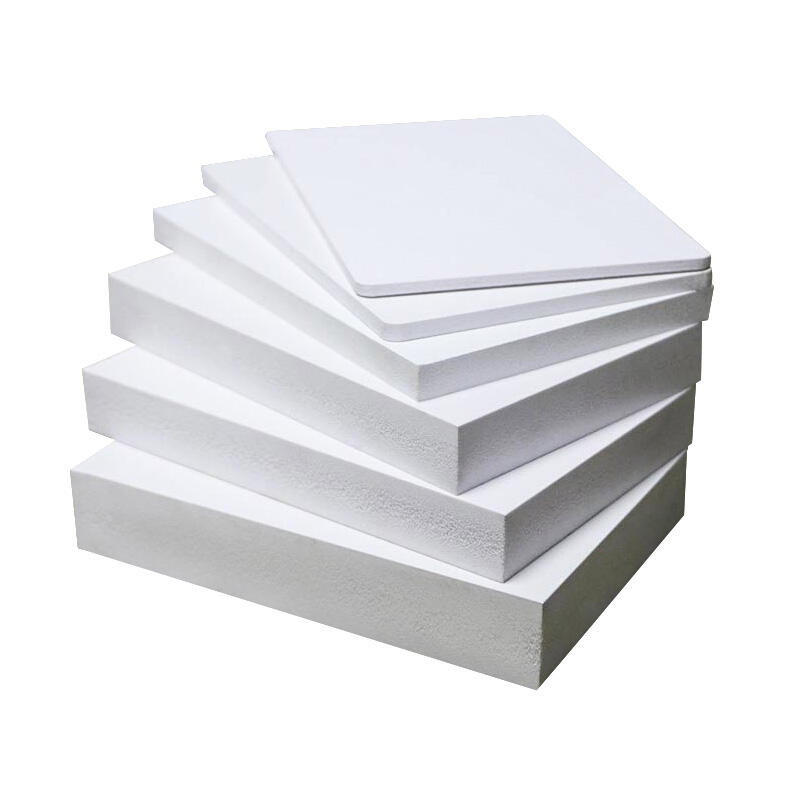
PVC foam sheet consists of polyvinyl chloride polymer that has been expanded through a specialized foaming process, creating a cellular structure that significantly reduces density while maintaining structural integrity. This unique composition results in a material that exhibits excellent chemical resistance to acids, alkalis, and most organic solvents, making it suitable for applications in harsh industrial environments. The closed-cell foam structure provides superior insulation properties while ensuring consistent performance across varying temperature ranges.
The manufacturing process involves precise control of temperature and pressure to achieve uniform cell distribution throughout the material thickness. This consistency ensures that PVC foam sheet maintains predictable mechanical properties regardless of the sheet size or thickness specification. Advanced formulations may include additives such as UV stabilizers, flame retardants, or colorants to meet specific application requirements without compromising the fundamental material characteristics.
Mechanical and Physical Characteristics
The mechanical properties of PVC foam sheet make it exceptionally suitable for structural applications where weight reduction is critical. With a density typically ranging from 0.4 to 0.8 g/cm³, this material provides an excellent strength-to-weight ratio that surpasses many traditional materials. The compressive strength varies according to density, with higher density sheets offering greater load-bearing capacity while maintaining the characteristic lightweight advantage.
Thermal expansion coefficients remain relatively stable across operational temperature ranges, ensuring dimensional stability in applications subject to temperature fluctuations. The material exhibits good impact resistance and flexural strength, characteristics that prove invaluable in prototyping applications where repeated handling and modification are necessary. Surface smoothness and consistent thickness tolerance contribute to precision machining capabilities that meet exacting industrial standards.
Industrial Fabrication Applications
Aerospace Component Manufacturing
Within aerospace manufacturing, PVC foam sheet serves as an essential material for creating lightweight structural components that must withstand demanding operational conditions. Aircraft interior panels, bulkheads, and non-load-bearing components benefit from the material's exceptional strength-to-weight ratio and fire-retardant properties when appropriately formulated. The ease of machining allows for precise fabrication of complex geometries required in modern aircraft design.
Ground support equipment and testing fixtures frequently incorporate this material due to its dimensional stability and chemical resistance to cleaning agents and hydraulic fluids commonly used in aerospace environments. Manufacturing jigs and assembly fixtures made from PVC foam sheet provide the necessary rigidity while remaining lightweight enough for easy handling by assembly technicians, thereby improving workplace safety and productivity.
Marine Industry Applications
Marine fabrication extensively utilizes PVC foam sheet for both structural and aesthetic applications where moisture resistance and corrosion immunity are paramount. Boat hulls, decking substrates, and interior panels benefit from the material's inherent resistance to saltwater exposure and marine growth. The closed-cell structure prevents water absorption, maintaining buoyancy characteristics essential for marine applications.
Shipbuilding operations employ this material for creating templates, patterns, and temporary structures that must withstand harsh marine environments during construction phases. The material's compatibility with marine adhesives and sealants ensures reliable bonding in composite construction techniques increasingly common in modern vessel manufacturing. Dimensional stability under varying humidity conditions makes it ideal for precision tooling applications in marine fabrication facilities.
Prototyping and Product Development
Rapid Prototyping Advantages
Product development teams increasingly rely on PVC foam sheet for rapid prototyping due to its exceptional machinability and surface finish quality. The material machines cleanly without chipping or delamination, allowing for precise creation of complex geometries using conventional machining techniques. CNC routing, cutting, and drilling operations produce smooth, consistent results that accurately represent final product specifications.
The uniform cell structure ensures consistent cutting forces during machining operations, reducing tool wear and improving surface quality compared to traditional foam materials. Heat-forming capabilities allow for creation of curved or complex shaped prototypes without compromising structural integrity, enabling designers to evaluate form and function simultaneously during the development process.
Design Validation and Testing
Engineering teams utilize PVC foam sheet prototypes for comprehensive design validation testing due to the material's ability to accurately simulate final product behavior under various loading conditions. The predictable mechanical properties allow for meaningful stress analysis and performance evaluation during the design optimization phase. This capability significantly reduces development time and costs associated with multiple design iterations.
Functional testing applications benefit from the material's chemical resistance and temperature stability, allowing prototypes to undergo realistic service condition evaluation. Environmental testing chambers, chemical exposure assessments, and thermal cycling tests can be conducted using prototypes that maintain dimensional stability throughout the testing process, providing reliable data for final design decisions.
Manufacturing Process Considerations
Machining and Fabrication Techniques
Successful fabrication of PVC foam sheet requires understanding of optimal cutting parameters and tool selection to achieve desired surface quality and dimensional accuracy. Sharp cutting tools and appropriate feed rates prevent cell crushing and ensure clean edge profiles essential for precision assembly operations. Dust extraction systems become critical during machining operations to maintain clean work environments and prevent material buildup on cutting tools.
Joining techniques include mechanical fastening, adhesive bonding, and thermal welding methods, each offering specific advantages depending on application requirements. Adhesive selection must consider both the foam chemistry and service environment to ensure long-term joint reliability. Mechanical fasteners require appropriate hole sizing to prevent crushing while maintaining adequate holding strength for intended applications.
Surface Treatment and Finishing
Surface preparation techniques for PVC foam sheet applications vary according to intended finish requirements and service conditions. Light sanding or chemical cleaning may be necessary to optimize adhesion for painted or coated surfaces. The naturally smooth surface texture of quality sheets often requires minimal preparation for direct use in visible applications.
Coating systems specifically formulated for PVC substrates provide enhanced durability and aesthetic appeal while maintaining the underlying material benefits. Primer selection becomes critical for applications requiring long-term coating adhesion, particularly in outdoor or chemically aggressive environments where coating failure could compromise the entire assembly integrity.
Quality Control and Standards
Industry Specifications and Testing
Industrial applications of PVC foam sheet must comply with various industry standards that govern material properties, manufacturing tolerances, and performance characteristics. ASTM and ISO testing protocols establish standardized methods for evaluating density, compressive strength, thermal properties, and chemical resistance to ensure consistent material performance across different suppliers and production batches.
Quality control measures during manufacturing include continuous monitoring of cell structure uniformity, density distribution, and surface quality parameters. Statistical process control techniques help maintain consistent product quality while identifying potential issues before they impact final product performance. Traceability systems ensure that material certifications and test results remain available throughout the supply chain for critical applications requiring documented material properties.
Performance Validation Methods
Validation testing for specific applications often requires custom test protocols that simulate actual service conditions more accurately than standard material tests. Accelerated aging tests, cyclic loading evaluations, and environmental exposure assessments provide data necessary for predicting long-term performance in demanding industrial applications.
Non-destructive testing methods allow for quality verification without compromising material integrity, particularly important for applications where material waste must be minimized. Ultrasonic thickness measurement, density profiling, and surface inspection techniques ensure that incoming materials meet specification requirements before entering production processes.
Cost-Effectiveness and Sustainability
Economic Benefits in Manufacturing
The economic advantages of using PVC foam sheet in industrial applications extend beyond initial material costs to include reduced processing time, lower tooling requirements, and decreased waste generation. The material's machinability reduces manufacturing cycle times while maintaining precision requirements, directly impacting production costs and delivery schedules.
Tool life improvements result from the material's non-abrasive nature and consistent cutting characteristics, reducing replacement costs and machine downtime associated with tool changes. The lightweight nature reduces shipping costs and handling requirements throughout the supply chain, contributing to overall project cost reduction.
Environmental Considerations
Modern PVC foam sheet manufacturing incorporates environmental considerations through improved production efficiency and waste reduction initiatives. Recycling programs for production waste and end-of-life products help minimize environmental impact while recovering valuable raw materials for future production cycles.
Energy consumption during production and processing remains lower than many alternative materials due to the material's low processing temperatures and minimal finishing requirements. Life cycle assessments increasingly favor materials that require less energy throughout their service life while maintaining performance requirements essential for industrial applications.
FAQ
What thickness options are available for industrial PVC foam sheet applications
PVC foam sheet is manufactured in thickness ranges from 1mm to 80mm, with custom thicknesses available for specialized applications. Standard industrial thicknesses include 3mm, 5mm, 10mm, 15mm, 20mm, and 25mm options, with larger thicknesses used primarily for structural applications requiring greater load-bearing capacity. Thickness selection depends on specific application requirements including strength, insulation properties, and weight constraints.
How does PVC foam sheet compare to traditional materials in marine applications
PVC foam sheet offers superior moisture resistance compared to wood-based materials while providing better workability than solid plastics or metals. Unlike wood, it will not rot, warp, or support marine growth, and unlike metals, it will not corrode in saltwater environments. The material's lightweight nature reduces overall vessel weight while maintaining structural requirements, making it increasingly popular in modern boat construction and marine equipment manufacturing.
What are the temperature limits for PVC foam sheet in industrial applications
Standard PVC foam sheet maintains dimensional stability and mechanical properties in temperature ranges from -40°C to +60°C, with specialized formulations available for extended temperature ranges up to +80°C. Continuous exposure to temperatures above 60°C may cause gradual property degradation, while short-term exposure to higher temperatures is generally acceptable. Cold temperature performance remains excellent, with the material maintaining impact resistance well below freezing temperatures.
Can PVC foam sheet be recycled after industrial use
Yes, PVC foam sheet can be recycled through specialized processing facilities that handle PVC materials. Clean production waste can often be reprocessed directly, while end-of-life products require separation from other materials and contaminants before recycling. Many manufacturers offer take-back programs for industrial customers to ensure proper disposal and recycling of used materials, contributing to sustainable manufacturing practices and circular economy initiatives.