Exceptional Design Versatility and Installation Efficiency
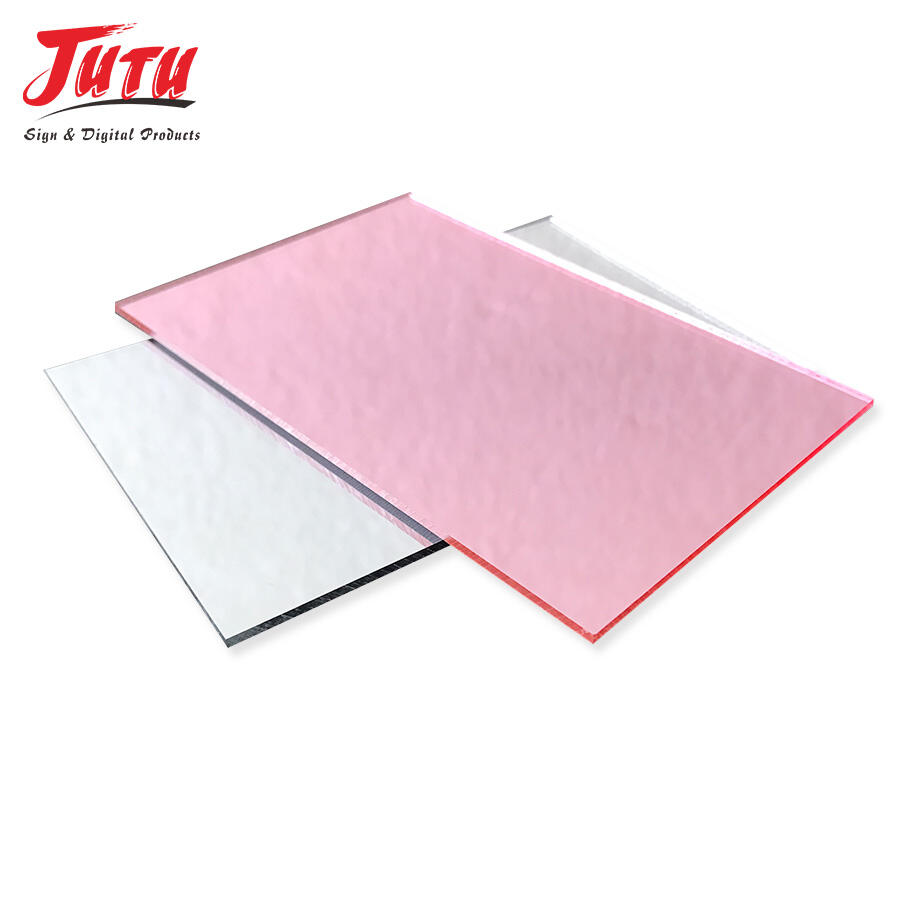
Pink mirror acrylic sheet revolutionizes design possibilities through its unparalleled versatility and ease of fabrication, enabling creative professionals to realize complex architectural visions that would be impractical or impossible with traditional mirror materials. The material responds excellently to standard fabrication techniques including cutting, drilling, routing, and thermoforming, allowing designers to create custom shapes, curved surfaces, and integrated mounting systems without compromising the integrity of the reflective surface. This fabrication flexibility extends to edge finishing options, where pink mirror acrylic sheet can be polished to create seamless transitions, beveled for decorative effects, or prepared for specialized mounting hardware without requiring expensive specialized tools or processes. The lightweight construction of pink mirror acrylic sheet, weighing approximately fifty percent less than equivalent glass mirrors, dramatically simplifies installation procedures and reduces structural requirements for mounting systems. Installation teams can handle larger pieces safely without mechanical lifting equipment, reducing labor costs and project timelines while improving workplace safety during construction phases. The material accommodates various mounting methods including mechanical fasteners, adhesive bonding, and integrated clip systems, providing flexibility to match specific architectural requirements and aesthetic preferences. Thermal forming capabilities allow pink mirror acrylic sheet to be shaped into complex three-dimensional forms while maintaining optical clarity and reflective properties, opening new possibilities for sculptural installations and architectural features. The stable dimensional properties ensure that fabricated pieces maintain their intended shapes and fit tolerances throughout installation and service life, eliminating callbacks and adjustments that commonly occur with less stable materials. Color consistency across production batches ensures that large installations maintain uniform appearance even when sourced from multiple shipments, while the stable pink tint provides consistent aesthetic effects under various lighting conditions. Quality assurance protocols during fabrication include optical testing to verify that cutting and forming operations do not introduce stress patterns or optical distortions that could compromise the visual performance of the finished installation.
 EN
EN