 EN
EN


The engineering world continuously seeks materials that deliver exceptional performance while maintaining minimal weight characteristics. Honeycomb board technology has emerged as a revolutionary solution, offering unprecedented strength-to-weight ratios that challenge traditional material assumptions. This comprehensive analysis explores the structural properties, manufacturing considerations, and industrial applications that make honeycomb board an indispensable component in modern engineering projects. Understanding these fundamental characteristics enables designers and engineers to make informed decisions when selecting materials for weight-critical applications.
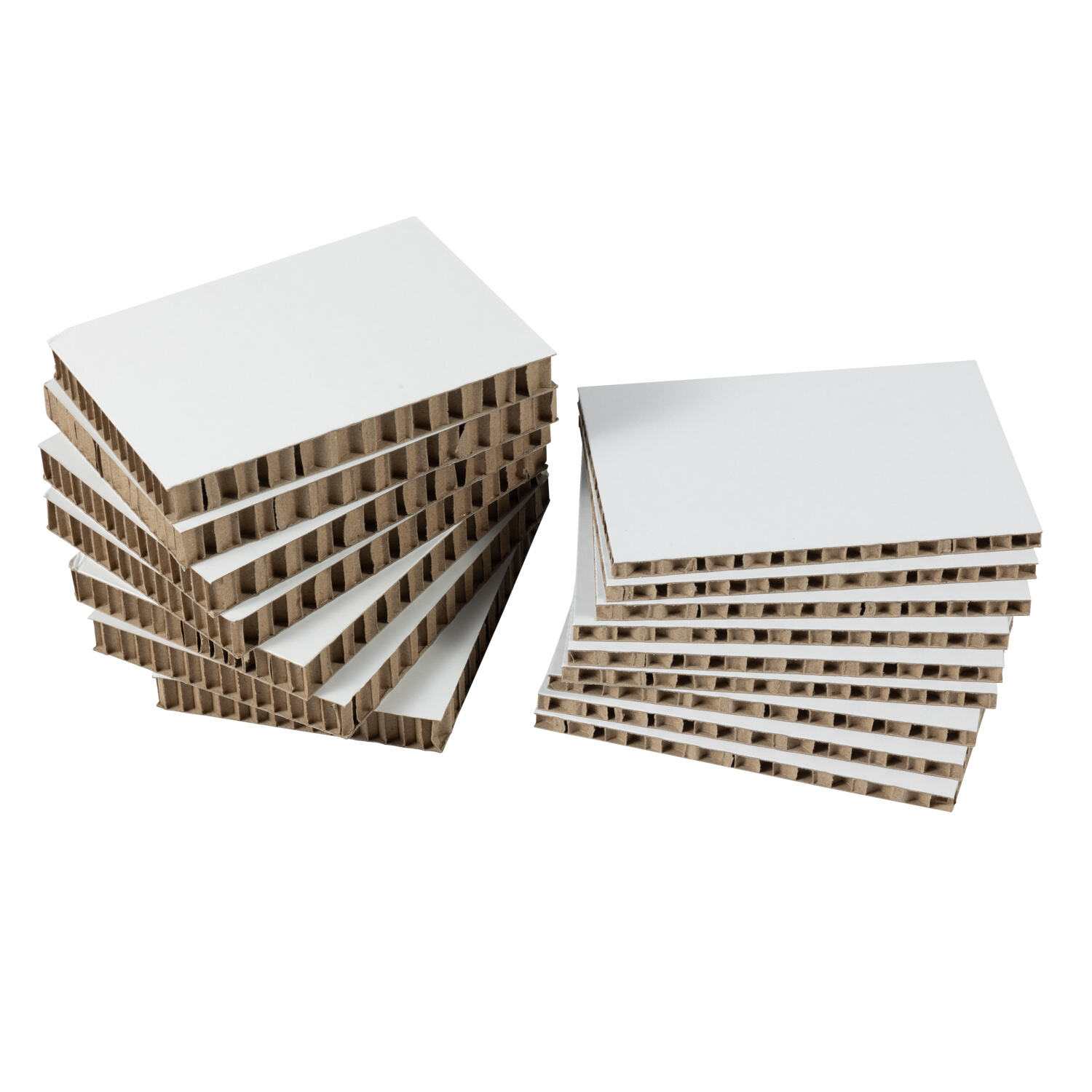
Fundamentals of Honeycomb Board Structure
Core Geometry and Material Distribution
The distinctive hexagonal cell structure of honeycomb board creates an optimal balance between material usage and structural integrity. This geometric configuration distributes loads efficiently across the entire surface area, preventing localized stress concentrations that typically compromise conventional materials. The cellular architecture maximizes structural performance while utilizing minimal raw material, resulting in exceptional strength-to-weight characteristics that surpass traditional solid materials by significant margins.
Manufacturing precision directly influences the performance characteristics of honeycomb board products. Advanced production techniques ensure consistent cell wall thickness, uniform cell dimensions, and precise bonding between facing sheets and core materials. These quality control measures guarantee predictable mechanical properties essential for engineering calculations and structural design applications.
Material Composition Variables
Different substrate materials significantly impact the overall performance profile of honeycomb board constructions. Aluminum honeycomb cores provide excellent strength characteristics with superior thermal conductivity, while polymer-based alternatives offer enhanced chemical resistance and reduced weight penalties. The selection of facing sheet materials further influences structural properties, with options ranging from lightweight composites to high-strength metallic alloys.
Core density variations allow engineers to customize honeycomb board specifications according to specific application requirements. Higher density configurations increase load-bearing capacity at the expense of additional weight, while lower density alternatives maximize weight savings for applications where ultimate strength is less critical than overall structural efficiency.
Strength-to-Weight Performance Analysis
Comparative Material Assessment
Honeycomb board consistently outperforms solid materials in strength-to-weight comparisons across multiple loading conditions. Flexural strength measurements demonstrate superior performance compared to equivalent weight solid aluminum or steel panels. The cellular structure distributes bending loads efficiently, preventing premature failure modes common in homogeneous materials under similar loading conditions.
Compression strength analysis reveals honeycomb board maintains structural integrity under significant loading while weighing substantially less than equivalent solid alternatives. The hexagonal cell geometry prevents buckling failure modes through distributed load paths that engage multiple structural elements simultaneously. This characteristic enables designers to specify lighter structural components without compromising safety factors or performance requirements.
Dynamic Loading Characteristics
Impact resistance testing demonstrates honeycomb board absorbs energy efficiently through controlled deformation of cellular structures. The progressive failure mechanism prevents catastrophic failure modes while maintaining overall structural integrity under dynamic loading conditions. This energy absorption capability makes honeycomb board particularly valuable in applications requiring crash protection or vibration damping characteristics.
Fatigue performance studies indicate honeycomb board maintains structural properties under cyclic loading conditions significantly better than many conventional materials. The distributed stress patterns inherent in cellular structures prevent crack propagation mechanisms that typically limit service life in solid materials subjected to repeated loading cycles.
Manufacturing Process Optimization
Production Methodology Considerations
Advanced manufacturing techniques enable precise control over honeycomb board dimensional characteristics and material properties. Expansion processes create uniform cell structures with consistent wall thicknesses, while adhesive bonding systems ensure reliable connections between core materials and facing sheets. Temperature and pressure control during manufacturing directly influence final product performance characteristics.
Quality assurance protocols verify dimensional accuracy, bond strength, and material consistency throughout production cycles. Non-destructive testing methods validate structural integrity without compromising product performance, ensuring each honeycomb board meets specified engineering requirements before delivery to end users.
Customization Capabilities
Modern production facilities accommodate custom honeycomb board specifications tailored to specific application requirements. Variable cell sizes, core heights, and facing sheet materials enable engineers to optimize performance characteristics for particular loading conditions or environmental exposures. This flexibility allows designers to specify precisely engineered solutions rather than accepting compromises inherent in standardized products.
Surface treatment options enhance honeycomb board performance in specialized applications requiring specific aesthetic, chemical resistance, or thermal properties. Coating systems protect core materials from environmental degradation while maintaining the fundamental strength-to-weight advantages that make honeycomb board attractive for demanding applications.
Industrial Applications and Performance Requirements
Aerospace and Transportation Industries
The aerospace industry extensively utilizes honeycomb board for interior panels, cargo flooring, and structural components where weight reduction directly impacts fuel efficiency and payload capacity. Aircraft manufacturers specify honeycomb board for galley units, lavatory modules, and cabin partitions because these applications demand high strength-to-weight ratios combined with fire resistance and dimensional stability.
Transportation applications benefit from honeycomb board characteristics in vehicle flooring, wall panels, and equipment enclosures. The material reduces overall vehicle weight while providing sufficient structural strength for operational loading conditions. Marine applications utilize honeycomb board for bulkheads, decking, and interior components where weight savings improve vessel performance and fuel economy.
Construction and Architectural Applications
Building construction projects incorporate honeycomb board for curtain wall systems, interior partitions, and architectural cladding where lightweight characteristics reduce structural loading requirements. The material provides excellent insulation properties while maintaining structural integrity necessary for building code compliance and occupant safety requirements.
Prefabricated building components utilize honeycomb board for wall panels, roofing systems, and modular construction elements. The strength-to-weight advantages facilitate transportation and installation while reducing foundation requirements and overall project costs. These characteristics make honeycomb board particularly valuable for remote construction projects where material transportation costs significantly impact project budgets.
Testing Methodologies and Performance Validation
Standard Testing Protocols
Comprehensive testing protocols validate honeycomb board performance characteristics according to established industry standards. Flexural strength testing quantifies bending resistance under controlled loading conditions, while compression testing determines load-bearing capacity for structural applications. These standardized procedures ensure consistent performance data for engineering calculations and specification development.
Environmental testing evaluates honeycomb board performance under temperature extremes, humidity variations, and chemical exposure conditions. Accelerated aging tests predict long-term performance characteristics, enabling engineers to specify appropriate safety factors and maintenance intervals for specific applications.
Quality Assurance Validation
Statistical process control methods monitor production consistency and identify potential quality variations before products reach end users. Batch testing protocols verify material properties meet specified requirements, while dimensional inspection ensures geometric accuracy necessary for proper installation and performance.
Third-party certification programs validate honeycomb board performance claims through independent testing and verification procedures. These certification processes provide additional assurance for engineers specifying critical applications where material failure could compromise safety or operational requirements.
Design Considerations and Engineering Guidelines
Structural Design Principles
Proper honeycomb board design requires understanding of cellular structure behavior under various loading conditions. Edge support requirements differ significantly from solid materials, necessitating careful attention to connection details and load transfer mechanisms. Engineers must consider the anisotropic properties inherent in honeycomb board when developing structural calculations and safety factor determinations.
Thermal expansion considerations become particularly important in honeycomb board applications where temperature variations create dimensional changes. The cellular structure accommodates thermal movement differently than solid materials, requiring specific design provisions to prevent stress concentrations at connection points or interface locations.
Installation and Connection Methods
Specialized fastening techniques optimize honeycomb board performance while maintaining structural integrity throughout service life. Threaded inserts, bonded connections, and mechanical fastening systems each offer specific advantages depending on application requirements and environmental conditions. Proper installation procedures ensure design assumptions remain valid during actual service conditions.
Edge sealing requirements protect honeycomb board core materials from moisture infiltration and environmental contamination. Appropriate sealing systems prevent degradation of cellular structures while maintaining the strength-to-weight advantages that make honeycomb board attractive for demanding applications.
Environmental Impact and Sustainability Considerations
Material Efficiency Benefits
Honeycomb board construction utilizes significantly less raw material compared to solid alternatives while delivering equivalent or superior structural performance. This material efficiency reduces environmental impact through decreased resource consumption and lower manufacturing energy requirements. The lightweight characteristics further reduce transportation energy consumption throughout the product lifecycle.
Recycling opportunities exist for honeycomb board products at end of service life, particularly for aluminum core constructions that retain material value. Proper separation techniques allow recovery of facing sheet materials and core components for reprocessing into new products, supporting circular economy principles in industrial applications.
Lifecycle Performance Advantages
Extended service life characteristics of properly specified honeycomb board reduce replacement frequency and associated environmental impacts. The material resists many degradation mechanisms that limit conventional material performance, resulting in lower total environmental impact over typical application lifecycles.
Energy efficiency benefits in applications like building construction and transportation directly reduce operational environmental impacts. The insulation properties of honeycomb board contribute to reduced heating and cooling energy requirements, while weight reduction in transportation applications improves fuel efficiency throughout vehicle service life.
FAQ
What factors determine optimal honeycomb board cell size for specific applications
Cell size selection depends on the balance between strength requirements, weight constraints, and manufacturing considerations. Smaller cells generally provide higher strength characteristics but increase material usage and manufacturing complexity. Larger cells reduce weight and manufacturing costs but may limit load-bearing capacity in demanding applications. Engineers should evaluate specific loading conditions, environmental requirements, and performance priorities when selecting appropriate cell geometries for honeycomb board applications.
How does honeycomb board performance compare to traditional materials in high-temperature environments
Honeycomb board thermal performance varies significantly based on core materials and facing sheet selections. Aluminum honeycomb cores maintain structural integrity at elevated temperatures better than polymer alternatives, while specialized high-temperature adhesives ensure reliable bonding under thermal cycling conditions. Applications requiring sustained high-temperature exposure should specify appropriate material combinations and include thermal barrier systems where necessary to maintain design performance throughout service life.
What quality control measures ensure consistent honeycomb board performance across production batches
Manufacturing quality control includes dimensional inspection, bond strength testing, and material property verification for each production batch. Statistical process control methods monitor key parameters throughout manufacturing cycles, while accelerated testing validates long-term performance characteristics. Third-party certification programs provide additional verification of performance claims, ensuring honeycomb board products meet specified engineering requirements consistently across different production runs.
How should engineers account for honeycomb board anisotropic properties in structural calculations
Honeycomb board exhibits different strength characteristics in various directions due to cellular structure orientation. Engineers must consider these directional properties when developing structural calculations, particularly for applications involving complex loading conditions. Design software and calculation methods should account for the orthotropic behavior of honeycomb board, using appropriate safety factors and load distribution assumptions to ensure reliable performance under actual service conditions.
Table of Contents
- Fundamentals of Honeycomb Board Structure
- Strength-to-Weight Performance Analysis
- Manufacturing Process Optimization
- Industrial Applications and Performance Requirements
- Testing Methodologies and Performance Validation
- Design Considerations and Engineering Guidelines
- Environmental Impact and Sustainability Considerations
-
FAQ
- What factors determine optimal honeycomb board cell size for specific applications
- How does honeycomb board performance compare to traditional materials in high-temperature environments
- What quality control measures ensure consistent honeycomb board performance across production batches
- How should engineers account for honeycomb board anisotropic properties in structural calculations