 EN
EN

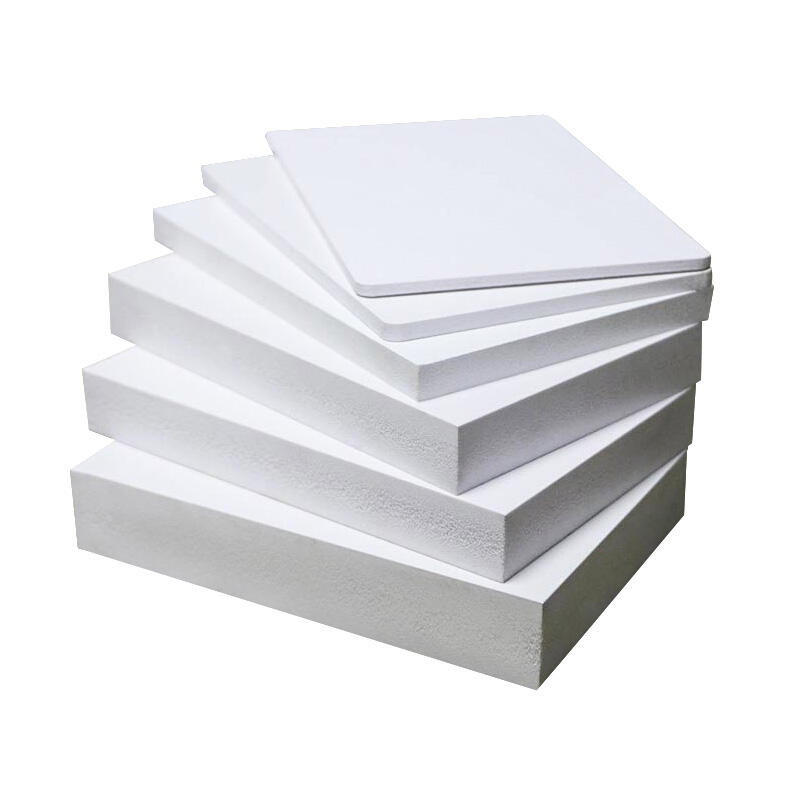
PVC foam board has emerged as one of the most versatile and effective materials in modern construction and industrial applications. This lightweight yet durable material offers exceptional thermal insulation properties that make it an ideal choice for various building projects, refrigeration systems, and specialized manufacturing processes. Understanding the thermal characteristics of PVC foam board is crucial for engineers, architects, and contractors who seek to optimize energy efficiency while maintaining structural integrity in their projects.
Fundamental Properties of PVC Foam Board Thermal Performance
Cellular Structure and Heat Transfer Mechanism
The thermal insulation capabilities of PVC foam board stem from its unique cellular structure, which contains millions of microscopic air pockets trapped within the polymer matrix. These air-filled cells significantly reduce heat transfer through conduction, convection, and radiation. The closed-cell structure prevents air movement within the material, creating an effective barrier against thermal bridging. This cellular architecture allows PVC foam board to achieve thermal conductivity values ranging from 0.035 to 0.045 W/mK, making it comparable to traditional insulation materials while offering superior moisture resistance and dimensional stability.
The heat transfer mechanism in PVC foam board operates on multiple levels of thermal resistance. The polymer walls of individual cells provide the primary structural barrier, while the trapped air serves as the secondary insulation layer. This dual-barrier system creates a synergistic effect that enhances overall thermal performance. Additionally, the material's low density, typically ranging from 0.4 to 0.8 g/cm³, contributes to its excellent insulation properties by minimizing the amount of solid material available for heat conduction.
R-Value and Thermal Resistance Characteristics
The R-value of PVC foam board represents its thermal resistance per unit thickness, which typically ranges from 3.5 to 4.2 per inch depending on the specific formulation and manufacturing process. This thermal resistance value demonstrates the material's effectiveness in preventing heat flow, making it suitable for applications requiring consistent temperature control. The high R-value of PVC foam board translates to significant energy savings in both heating and cooling applications, as it reduces the thermal load on HVAC systems.
Temperature stability is another critical aspect of PVC foam board thermal performance. The material maintains its insulation properties across a wide temperature range, typically from -40°C to 70°C, without significant degradation or dimensional changes. This thermal stability ensures consistent performance in various environmental conditions, from freezer applications to moderate heat exposure scenarios. The material's low coefficient of thermal expansion further enhances its reliability in temperature-variable environments.
Manufacturing Factors Affecting Thermal Insulation
Density Variations and Cell Structure Optimization
The manufacturing process of PVC foam board directly influences its thermal insulation properties through careful control of density and cell structure. Lower-density formulations generally provide better thermal insulation due to higher air content, but manufacturers must balance this with mechanical strength requirements. The foaming process involves precise control of chemical blowing agents, temperature profiles, and pressure conditions to achieve optimal cell morphology. Uniform cell distribution and appropriate cell size are essential for maximizing thermal resistance while maintaining structural integrity.
Advanced manufacturing techniques allow for the production of PVC foam board with gradient density profiles, where different layers within the same board can have varying thermal properties. This approach enables customized thermal performance for specific applications. For instance, a higher-density skin layer can provide improved surface durability while maintaining a low-density core for optimal insulation. The manufacturing parameters also affect the closed-cell percentage, which directly correlates with moisture resistance and long-term thermal performance stability.
Additives and Formulation Impact on Thermal Properties
The incorporation of specific additives during PVC foam board production can significantly enhance thermal insulation properties. Thermal stabilizers help maintain the material's performance under temperature stress, while specialized fillers can improve thermal resistance without substantially increasing density. Infrared reflective additives, such as aluminum powder or specialized ceramic particles, can reduce radiative heat transfer through the material. These formulation modifications allow manufacturers to tailor the thermal characteristics of PVC foam board for specific applications.
Fire retardant additives, while primarily included for safety purposes, can also influence thermal properties by altering the cellular structure and polymer matrix. The selection and concentration of these additives require careful consideration to maintain optimal thermal insulation while meeting fire safety standards. Modern formulations often incorporate multifunctional additives that simultaneously enhance thermal performance, fire resistance, and UV stability, providing comprehensive protection for long-term applications.
Comparative Analysis with Traditional Insulation Materials
Performance Comparison with Expanded Polystyrene and Polyurethane
When compared to expanded polystyrene (EPS), PVC foam board demonstrates superior moisture resistance while maintaining comparable thermal insulation properties. EPS typically achieves thermal conductivity values of 0.033 to 0.040 W/mK, similar to PVC foam board, but lacks the chemical resistance and dimensional stability that PVC offers. The closed-cell structure of PVC foam board provides better protection against moisture infiltration, which can significantly degrade the thermal performance of traditional foam insulation materials over time.
Polyurethane foam insulation generally offers slightly better thermal conductivity values, ranging from 0.020 to 0.030 W/mK, but PVC foam board compensates with superior durability and processing characteristics. The rigid structure of PVC foam board makes it easier to handle during installation and provides better resistance to compression loads. Additionally, PVC foam board maintains its thermal properties more consistently over extended periods, as it is less susceptible to aging effects that can reduce the insulation value of polyurethane foam systems.
Advantages Over Mineral Wool and Fiberglass Insulation
Traditional mineral wool and fiberglass insulation materials rely on trapped air within fibrous structures to provide thermal resistance, but they are susceptible to moisture absorption and settling over time. PVC foam board offers several advantages over these materials, including complete moisture resistance, dimensional stability, and consistent thermal performance throughout its service life. The solid structure of PVC foam board eliminates the risk of fiber migration and provides a cleaner installation environment compared to fibrous insulation materials.
The thermal performance of PVC foam board remains constant regardless of humidity levels, unlike mineral wool and fiberglass, which can experience significant performance degradation when exposed to moisture. This characteristic makes PVC foam board particularly valuable in high-humidity environments, refrigeration applications, and marine construction projects. The material's resistance to rodent damage and microbial growth further enhances its long-term thermal performance reliability compared to traditional insulation materials.
Application-Specific Thermal Performance Considerations
Refrigeration and Cold Storage Applications
In refrigeration and cold storage applications, PVC foam board excels due to its exceptional thermal stability at low temperatures and complete vapor barrier properties. The material's closed-cell structure prevents moisture infiltration that could lead to ice formation and thermal performance degradation. PVC foam board maintains its insulation properties even when subjected to frequent temperature cycling, making it ideal for walk-in coolers, freezer panels, and refrigerated transport containers.
The thermal bridging characteristics of PVC foam board are particularly important in refrigeration applications, where minimizing heat transfer is critical for energy efficiency and product preservation. The material's low thermal conductivity helps maintain consistent internal temperatures while reducing the workload on refrigeration equipment. Installation considerations for cold storage applications include proper joint sealing and thermal break design to maximize the effectiveness of PVC foam board insulation systems.
Building Envelope and HVAC Applications
For building envelope applications, PVC foam board provides effective thermal insulation while serving as a vapor barrier and air infiltration control layer. The material's structural properties allow it to function as both insulation and sheathing in certain applications, reducing overall wall thickness while maintaining thermal performance requirements. The thermal resistance provided by PVC foam board contributes significantly to building energy efficiency and occupant comfort by minimizing temperature variations and reducing heating and cooling loads.
In HVAC ductwork applications, PVC foam board insulation helps prevent condensation formation and reduces energy losses in heating and cooling distribution systems. The material's smooth surface finish and chemical resistance make it suitable for use in commercial and industrial HVAC installations where cleanliness and durability are essential. The thermal properties of PVC foam board also contribute to noise reduction in ductwork systems by providing both thermal and acoustic insulation benefits.
Installation Best Practices for Optimal Thermal Performance
Joint Sealing and Thermal Bridge Prevention
Proper installation of PVC foam board is crucial for achieving optimal thermal performance, with particular attention required for joint sealing and thermal bridge prevention. Gaps between panels can significantly compromise thermal efficiency, making it essential to use appropriate sealants and joining techniques. Specialized PVC-compatible sealants and tapes should be used to create continuous thermal barriers at panel joints. The installation process should include careful measurement and cutting to minimize gaps, followed by thorough sealing of all joints and penetrations.
Thermal bridging through fasteners and support structures must be carefully managed to maintain the thermal integrity of PVC foam board installations. Mechanical fasteners should be minimized where possible, and when necessary, they should be designed to minimize heat transfer through the fastener material. Thermal break strips or gaskets can be used around fasteners to reduce thermal bridging effects. The design of support structures should also consider thermal break elements to prevent heat transfer through structural components that penetrate the insulation layer.
Surface Preparation and Adhesive Considerations
Surface preparation plays a critical role in ensuring optimal thermal performance of PVC foam board installations. Clean, dry surfaces provide better adhesion for both mechanical and adhesive attachment methods, preventing air gaps that could compromise thermal efficiency. Surface irregularities should be addressed before installation to ensure consistent contact between the PVC foam board and substrate. Proper surface preparation also prevents moisture entrapment that could lead to long-term thermal performance degradation.
The selection of appropriate adhesives for PVC foam board installation affects both thermal performance and long-term durability. Adhesives should be compatible with PVC materials and provide consistent bonding without creating thermal bridges. Low-thermal-conductivity adhesives are preferred to minimize heat transfer through the bonding layer. The adhesive application should be uniform to prevent air pockets or voids that could compromise the thermal barrier effectiveness of the PVC foam board system.
Long-Term Performance and Maintenance
Aging Effects on Thermal Properties
The long-term thermal performance of PVC foam board is generally stable, with minimal degradation over typical service life periods of 20-30 years. Unlike some foam insulation materials that may experience cell gas diffusion or structural changes over time, PVC foam board maintains its cellular structure and thermal properties through proper formulation and stabilization. Regular monitoring of thermal performance in critical applications can help identify any changes that might require maintenance or replacement.
Environmental factors such as UV exposure, temperature cycling, and chemical exposure can potentially affect the long-term thermal performance of PVC foam board. Proper protective measures, including UV-resistant coatings or coverings in outdoor applications, help maintain thermal properties throughout the material's service life. Understanding the specific environmental conditions and their potential effects on PVC foam board allows for appropriate specification and maintenance planning to ensure continued thermal performance.
Maintenance Requirements and Performance Monitoring
Maintenance requirements for PVC foam board thermal insulation systems are generally minimal due to the material's durability and stability. Regular inspection of joints, seals, and surface conditions helps identify potential issues before they affect thermal performance. Any damage to the surface or edge sealing should be promptly repaired to maintain thermal integrity. Cleaning procedures should use compatible chemicals that do not affect the PVC material or compromise its thermal properties.
Performance monitoring in critical applications may include thermal imaging surveys to identify areas of heat loss or thermal bridging. These assessments can help optimize system performance and identify maintenance needs. Energy consumption monitoring can also provide indirect feedback on the thermal performance of PVC foam board insulation systems. Establishing baseline performance measurements allows for comparison over time and helps identify when maintenance or replacement may be necessary to maintain optimal thermal efficiency.
FAQ
What is the typical thermal conductivity range for PVC foam board
The thermal conductivity of PVC foam board typically ranges from 0.035 to 0.045 W/mK, depending on the specific formulation, density, and manufacturing process. Lower-density formulations generally achieve better thermal insulation properties, with values closer to 0.035 W/mK, while higher-density versions may reach 0.045 W/mK. This range makes PVC foam board comparable to many traditional insulation materials while offering additional benefits such as moisture resistance and structural capability.
How does temperature affect the thermal performance of PVC foam board
PVC foam board maintains consistent thermal performance across a wide temperature range, typically from -40°C to 70°C, without significant changes in insulation properties. The material's thermal conductivity remains relatively stable within this range, and the closed-cell structure prevents performance degradation due to temperature cycling. At extreme temperatures outside this range, some property changes may occur, but the material generally returns to its original performance characteristics when returned to normal operating temperatures.
Can PVC foam board serve as both insulation and vapor barrier
Yes, PVC foam board can effectively function as both thermal insulation and vapor barrier due to its closed-cell structure and low permeability to water vapor. The material's vapor transmission rate is extremely low, making it an effective moisture barrier while simultaneously providing thermal insulation. This dual functionality can simplify building envelope design and reduce the number of separate components required in insulation systems, potentially reducing installation costs and complexity.
What factors should be considered when selecting PVC foam board for thermal applications
Key factors for selecting PVC foam board for thermal applications include the required R-value or thermal resistance, operating temperature range, environmental exposure conditions, and mechanical load requirements. The specific application environment, including humidity levels, chemical exposure, and UV radiation potential, should also be evaluated. Additionally, fire safety requirements, building code compliance, and long-term performance expectations should be considered to ensure the selected PVC foam board specification meets all project requirements effectively.
Table of Contents
- Fundamental Properties of PVC Foam Board Thermal Performance
- Manufacturing Factors Affecting Thermal Insulation
- Comparative Analysis with Traditional Insulation Materials
- Application-Specific Thermal Performance Considerations
- Installation Best Practices for Optimal Thermal Performance
- Long-Term Performance and Maintenance
- FAQ