 EN
EN

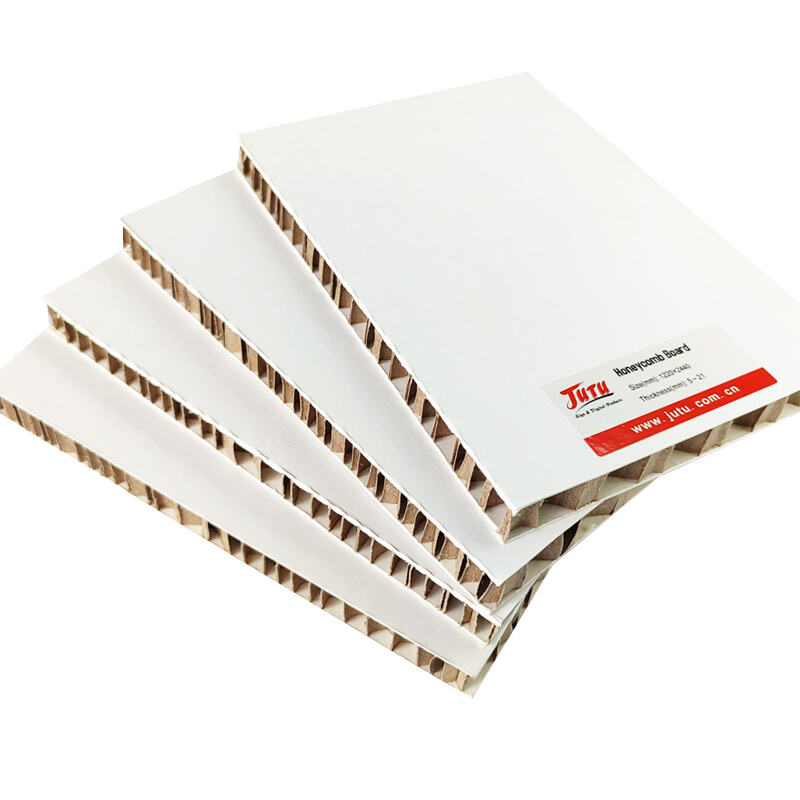
Honeycomb board represents a remarkable engineering solution that achieves exceptional structural performance through geometric innovation. This lightweight composite material delivers superior strength-to-weight ratios by leveraging hexagonal cellular architecture, making it an optimal choice for applications where weight reduction cannot compromise structural integrity. Understanding the structural analysis of honeycomb board reveals why this material has become indispensable across aerospace, construction, packaging, and marine industries.
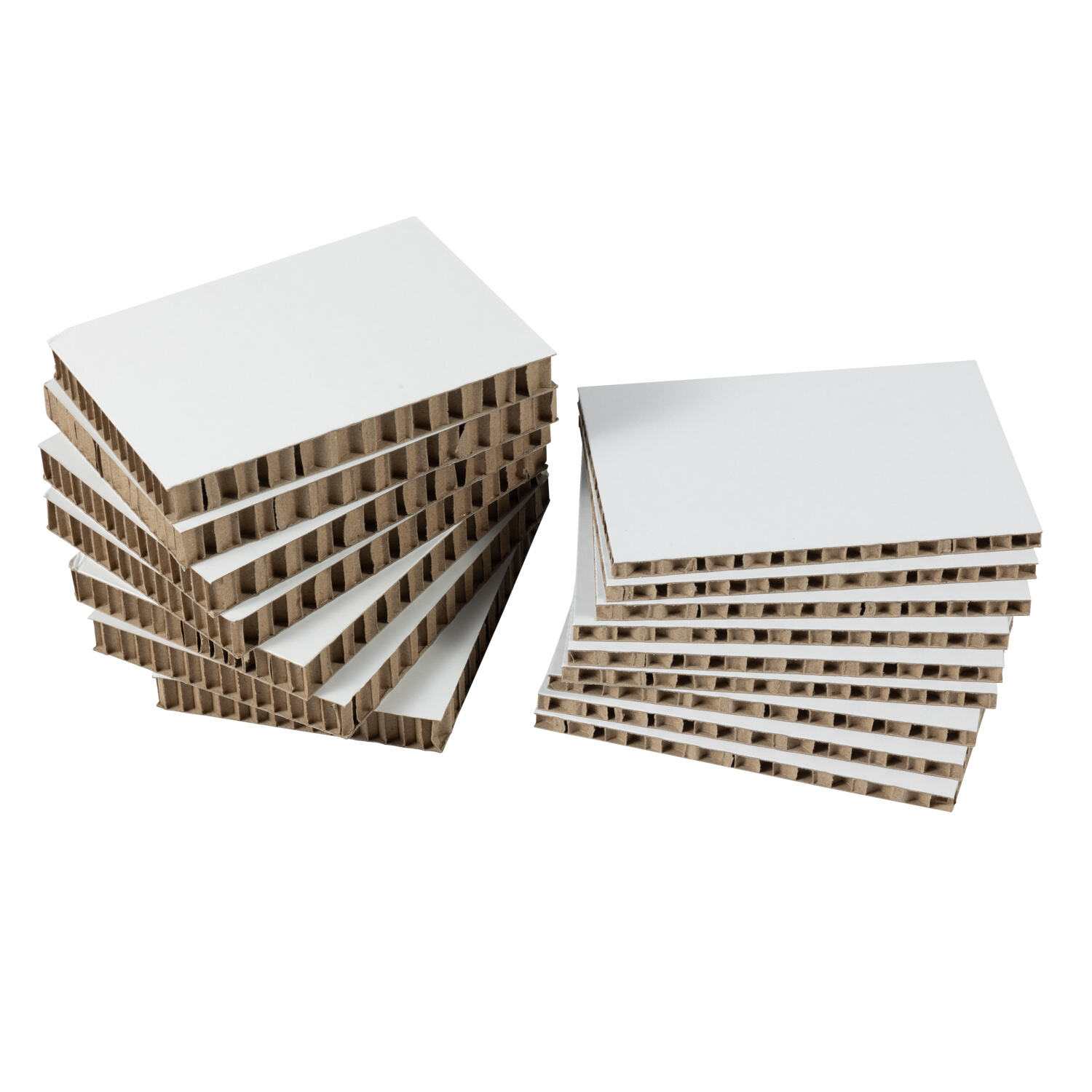
The strength-to-weight ratio analysis of honeycomb board demonstrates how cellular geometry creates extraordinary mechanical properties. When engineers examine honeycomb board structures under various loading conditions, they discover that the hexagonal core configuration provides optimal material distribution while minimizing weight. This structural efficiency makes honeycomb board an engineering marvel that consistently outperforms solid materials in applications where weight savings directly translate to performance improvements and cost reductions.
Fundamental Strength-to-Weight Mechanics
Hexagonal Core Architecture
The hexagonal geometry of honeycomb board creates an inherently strong structural foundation that maximizes material efficiency. Each cell in the honeycomb board structure forms a perfect hexagon that distributes loads through its walls using both compression and shear forces. This geometric arrangement allows honeycomb board to achieve remarkable strength while using minimal material, resulting in weight savings that can exceed 80% compared to equivalent solid materials.
The cellular structure of honeycomb board enables exceptional energy absorption capabilities through controlled deformation mechanisms. When loads are applied to honeycomb board surfaces, the hexagonal cells compress uniformly, creating a predictable failure pattern that maintains structural integrity even under extreme conditions. This controlled deformation characteristic makes honeycomb board particularly valuable in applications requiring impact resistance and crashworthiness.
Material Distribution Efficiency
Honeycomb board achieves optimal material distribution by concentrating structural material where it provides maximum benefit. The face sheets of honeycomb board carry in-plane loads and bending moments, while the core provides shear resistance and prevents buckling. This division of structural responsibilities allows honeycomb board to eliminate unnecessary material from neutral zones where it contributes little to overall strength.
The thickness of honeycomb board cell walls can be precisely controlled to optimize strength-to-weight ratios for specific applications. Engineers can adjust cell wall thickness, cell size, and face sheet materials to create honeycomb board configurations that meet exact performance requirements while maintaining minimum weight. This customization capability ensures that each honeycomb board application achieves maximum structural efficiency.
Comparative Strength Analysis
Bending Strength Performance
Honeycomb board demonstrates exceptional bending strength characteristics that significantly exceed those of solid materials at equivalent weights. The sandwich construction of honeycomb board creates high section modulus values by separating face sheets with a lightweight core, maximizing the moment arm for bending resistance. This structural configuration allows honeycomb board to achieve bending strengths comparable to much heavier solid materials.
Testing data reveals that honeycomb board typically achieves bending strength-to-weight ratios that are 5-10 times higher than aluminum sheet and 3-6 times higher than steel plate. These performance advantages make honeycomb board particularly attractive for applications such as aircraft flooring, marine bulkheads, and architectural panels where bending loads dominate the structural requirements.
Compression and Shear Characteristics
The compression strength of honeycomb board varies significantly with loading direction, creating opportunities for optimization based on anticipated load paths. In-plane compression strength of honeycomb board depends primarily on cell wall thickness and material properties, while out-of-plane compression involves complex buckling mechanisms within the cellular structure. Understanding these directional properties allows engineers to orient honeycomb board for maximum structural efficiency.
Shear strength analysis reveals that honeycomb board excels in applications requiring torsional resistance and panel stability. The hexagonal cell geometry provides multiple load paths for shear forces, preventing catastrophic failure modes common in solid materials. This shear performance makes honeycomb board ideal for applications such as aircraft control surfaces and automotive body panels where torsional rigidity is critical.
Weight Optimization Strategies
Core Density Management
Optimizing honeycomb board performance requires careful consideration of core density and its relationship to strength requirements. Lower density honeycomb board cores provide maximum weight savings but may limit compression strength and impact resistance. Engineers must balance these competing requirements to achieve optimal strength-to-weight ratios for specific applications.
Advanced honeycomb board designs incorporate gradient density cores that place higher density material in high-stress regions while maintaining low density in areas with minimal loading. This approach allows honeycomb board structures to achieve targeted performance levels while minimizing overall weight. Variable density honeycomb board configurations can improve strength-to-weight ratios by 15-25% compared to uniform density designs.
Face Sheet Integration
The selection and integration of face sheet materials significantly impacts honeycomb board strength-to-weight performance. High-strength, low-weight face sheet materials such as carbon fiber composites can dramatically improve honeycomb board performance ratios. The bond between face sheets and core in honeycomb board structures must transfer loads efficiently to realize these performance benefits.
Face sheet thickness optimization represents another critical factor in honeycomb board weight management. Thicker face sheets improve bending strength but add weight, while thinner sheets may limit load-carrying capacity. Advanced honeycomb board designs use tapered face sheets that provide reinforcement only where needed, optimizing the strength-to-weight relationship throughout the structure.
Application-Specific Performance
Aerospace Applications
Aerospace applications demonstrate the ultimate expression of honeycomb board strength-to-weight optimization. Aircraft components made from honeycomb board achieve weight savings of 40-60% compared to metallic alternatives while maintaining or improving structural performance. These weight reductions translate directly to fuel savings, increased payload capacity, and extended range capabilities.
The fatigue resistance of honeycomb board in aerospace applications provides additional performance advantages beyond basic strength-to-weight ratios. Honeycomb board structures demonstrate excellent fatigue life under cyclic loading conditions, reducing maintenance requirements and improving aircraft availability. This durability characteristic enhances the overall value proposition of honeycomb board in weight-critical aerospace applications.
Marine and Construction Industries
Marine applications leverage honeycomb board strength-to-weight advantages to improve vessel performance and fuel efficiency. Honeycomb board bulkheads and deck structures provide structural strength while reducing overall vessel weight, improving speed and reducing operating costs. The corrosion resistance of properly selected honeycomb board materials extends service life in harsh marine environments.
Construction industry applications utilize honeycomb board for curtain walls, roofing systems, and interior partitions where weight reduction improves handling efficiency and reduces structural loads. The insulation properties of honeycomb board provide additional value by combining structural and thermal performance in a single lightweight system. These multi-functional capabilities enhance the effective strength-to-weight ratio by eliminating the need for separate insulation materials.
FAQ
How is the strength-to-weight ratio of honeycomb board calculated?
The strength-to-weight ratio of honeycomb board is calculated by dividing the ultimate strength (in force per unit area) by the material density (mass per unit volume). For honeycomb board, engineers typically evaluate multiple strength parameters including bending strength, compression strength, and shear strength to create comprehensive performance profiles. The specific calculation method depends on the intended application and primary loading conditions.
What factors most significantly impact honeycomb board strength-to-weight performance?
Cell size, cell wall thickness, core material selection, and face sheet properties represent the most critical factors affecting honeycomb board strength-to-weight ratios. Cell geometry determines the fundamental structural efficiency, while material selection influences both strength and weight characteristics. The bond quality between core and face sheets also significantly impacts overall performance by ensuring effective load transfer throughout the honeycomb board structure.
Can honeycomb board strength-to-weight ratios be customized for specific applications?
Yes, honeycomb board strength-to-weight ratios can be extensively customized through core geometry modification, material selection, and face sheet optimization. Engineers can adjust cell size from 1/8 inch to 1 inch, modify cell wall thickness, select from various core materials, and specify face sheet materials and thicknesses to achieve target performance characteristics. This customization capability allows honeycomb board to be optimized for specific strength requirements while minimizing weight.
How does honeycomb board strength-to-weight performance compare to other lightweight materials?
Honeycomb board typically achieves superior strength-to-weight ratios compared to foam cores, corrugated structures, and most solid lightweight materials. While advanced composites may achieve comparable or better ratios in specific loading conditions, honeycomb board offers more balanced performance across multiple load types and generally provides better cost-effectiveness. The multi-directional strength characteristics of honeycomb board make it particularly advantageous in applications with complex loading patterns.
Table of Contents
- Fundamental Strength-to-Weight Mechanics
- Comparative Strength Analysis
- Weight Optimization Strategies
- Application-Specific Performance
-
FAQ
- How is the strength-to-weight ratio of honeycomb board calculated?
- What factors most significantly impact honeycomb board strength-to-weight performance?
- Can honeycomb board strength-to-weight ratios be customized for specific applications?
- How does honeycomb board strength-to-weight performance compare to other lightweight materials?