 EN
EN

Fire safety is one of the most critical requirements in modern construction, and material selection plays a defining role in how well a building performs under fire conditions. PVC foam board has emerged as a widely adopted building material that contributes meaningfully to fire resistance in residential, commercial, and industrial projects. Understanding exactly how PVC foam board achieves this performance helps architects, contractors, and project managers make informed decisions that protect both occupants and assets.
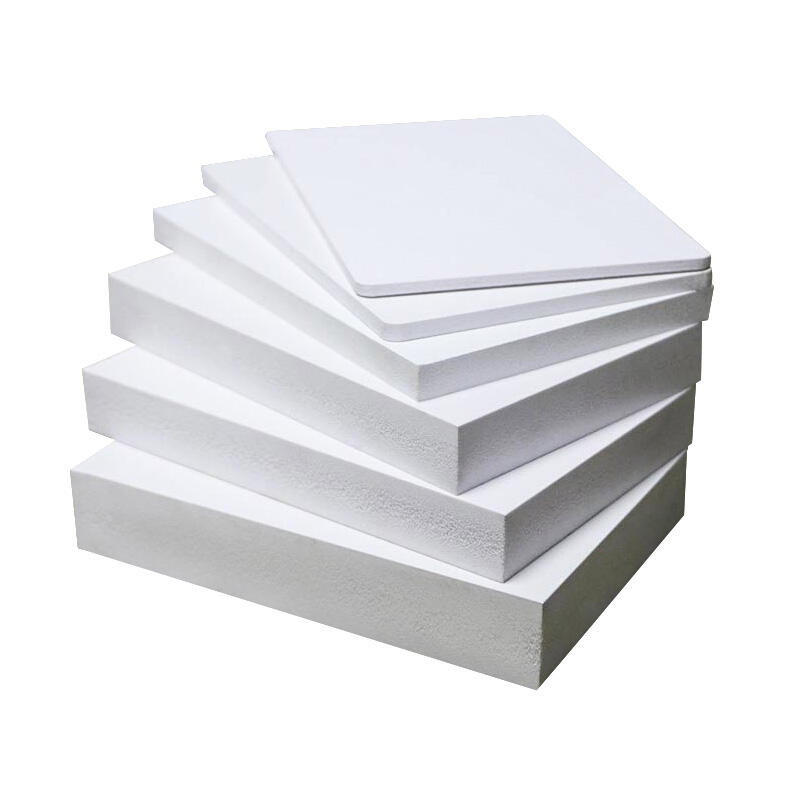
PVC foam board is manufactured from polyvinyl chloride, a polymer that naturally contains a high proportion of chlorine. This chemical composition gives PVC foam board an inherent resistance to ignition and flame spread that distinguishes it from many other common construction materials. When PVC foam board is evaluated against wood, standard polystyrene foam, or untreated composite panels, its fire behavior consistently demonstrates a meaningful advantage in building safety applications.
The Chemistry Behind PVC Foam Board Fire Resistance
How Chlorine Content Limits Flame Spread
The fire-resistant properties of PVC foam board originate directly from its base material. Polyvinyl chloride contains approximately 57 percent chlorine by molecular weight, and this chlorine plays an active role during combustion. When PVC foam board is exposed to heat or flame, the chlorine atoms are released as hydrogen chloride gas, which acts as a chemical flame suppressant. This reaction interrupts the combustion cycle at a molecular level, causing PVC foam board to self-extinguish once the external ignition source is removed.
This self-extinguishing behavior is one of the most valued characteristics of PVC foam board in building applications. Unlike materials that continue burning after ignition, PVC foam board limits the propagation of fire across surfaces. Construction teams specifying interior cladding, partition walls, ceiling panels, and cabinet substrates often choose PVC foam board precisely because of this controlled flame-spread behavior. The material does not require additional fire-retardant coatings to achieve its baseline performance, which also simplifies installation logistics.
Flame Retardant Additives in PVC Foam Board Production
Beyond the inherent chlorine chemistry, PVC foam board manufacturers typically incorporate flame retardant additives during the extrusion process to further enhance fire performance. These additives work synergistically with the base PVC foam board matrix to reduce heat release rates and minimize smoke generation. The result is a PVC foam board product engineered to meet international fire safety standards, including classifications recognized in building codes across multiple markets.
PVC foam board produced with well-formulated additive packages can achieve fire ratings that comply with Class B or equivalent fire performance standards under European or national regulatory frameworks. For construction professionals, this means that PVC foam board can satisfy project specification requirements without the need for expensive secondary fireproofing treatments on every surface. Specifying PVC foam board early in the design phase simplifies compliance documentation and reduces material rework during inspections.
Applications Where PVC Foam Board Fire Resistance Adds Value
Interior Partitions and Wall Cladding
Interior partitions represent one of the most common applications for PVC foam board in commercial and institutional construction. PVC foam board provides a smooth, workable substrate that can be cut, routed, and fastened with standard carpentry tools, making it highly practical for contractors. In corridors, offices, retail environments, and hospitality interiors, PVC foam board adds a fire-resistant layer that contributes to the overall compartmentalization strategy of a building. Compartmentalization slows the movement of fire between zones, giving occupants more time to evacuate safely.
Wall cladding systems that incorporate PVC foam board also benefit from its moisture resistance, which prevents the deterioration that can compromise the structural integrity of fire barriers over time. A fire barrier made from PVC foam board that resists both flame and moisture remains effective across its service life, whereas materials that absorb water may warp or weaken and lose their intended fire separation function.
Ceiling Systems and Suspended Panels
PVC foam board is widely used in suspended ceiling systems and dropped panel installations in commercial buildings, clean rooms, and industrial facilities. In these overhead applications, the fire resistance of PVC foam board is particularly important because ceilings directly influence how quickly fire and smoke spread horizontally through a building. A ceiling constructed with PVC foam board can slow this lateral spread, reducing the rate at which toxic combustion gases fill occupied spaces during a fire event.
The low density of PVC foam board also means that ceiling assemblies remain lightweight, reducing structural loading on the building frame. This combination of fire resistance and low weight makes PVC foam board a practical and safety-aligned choice for ceiling applications where both performance and ease of installation are priorities.
Compliance and Standards for PVC Foam Board in Construction
Meeting Building Code Fire Requirements
Construction projects in most jurisdictions must comply with fire performance requirements set out in national or regional building codes. PVC foam board suppliers typically provide test certification data showing how their specific PVC foam board products perform under standardized fire test methods. These certifications are essential for project specification and regulatory approval. When procuring PVC foam board for a building project, requesting the relevant fire test reports ensures that the material meets the required performance class for the intended application.
PVC foam board used in public buildings, schools, hospitals, and high-rise construction may face stricter fire classification requirements than PVC foam board used in low-rise residential projects. Understanding which fire classification applies to a specific application helps procurement teams select the appropriate PVC foam board grade and thickness. Thicker PVC foam board panels generally provide higher thermal mass and improved resistance to heat penetration, which can further support the fire safety strategy of a project.
Smoke Performance Considerations for PVC Foam Board
Fire resistance involves not only flame spread but also smoke generation. PVC foam board, when burning, can produce smoke that contains hydrogen chloride and other combustion byproducts. In enclosed spaces, smoke toxicity is a significant concern for occupant safety. This is why PVC foam board fire performance specifications in sensitive environments often include both flame spread indices and smoke development indices. Selecting PVC foam board with low smoke density ratings ensures that the material performs responsibly across both dimensions of fire safety.
Advances in PVC foam board formulation have led to low-smoke variants that reduce hydrogen chloride emissions during combustion. These enhanced PVC foam board grades are particularly suited for applications in transportation hubs, tunnels, and other enclosed spaces where smoke accumulation poses a heightened risk. Specifying PVC foam board with documented smoke performance data adds an additional layer of protection beyond flame resistance alone.
FAQ
Is PVC foam board naturally fire resistant without additives?
PVC foam board has an inherent fire resistance due to its high chlorine content, which disrupts combustion chemistry. However, most commercial PVC foam board products also incorporate flame retardant additives to achieve specific fire classification ratings required by building codes. The combination of natural PVC chemistry and engineered additives gives PVC foam board its reliable fire performance.
Which building applications benefit most from using PVC foam board for fire safety?
PVC foam board is most beneficial in applications where fire compartmentalization is critical, including interior partitions, wall cladding, and ceiling systems. Commercial buildings, institutional facilities, and industrial environments where fire containment directly protects occupants and assets benefit greatly from specifying PVC foam board as a structural or finishing material.
How should I verify that PVC foam board meets fire standards for my project?
Request fire test certification documents from your PVC foam board supplier before procurement. These documents should reference standardized test methods and confirm the fire classification of the specific PVC foam board product. Cross-reference the certification with the fire performance requirements stated in your project specifications or local building code to confirm suitability.