 EN
EN

When it comes to lightweight, durable, and thermally efficient materials, PVC foam board has become one of the most widely specified materials across construction, industrial fabrication, and interior design sectors. Its closed-cell structure plays a central role in its ability to resist heat transfer, making PVC foam board a genuinely functional choice wherever thermal management matters. Understanding exactly how PVC foam board behaves as a thermal insulator helps engineers, architects, and procurement professionals make well-informed material decisions.
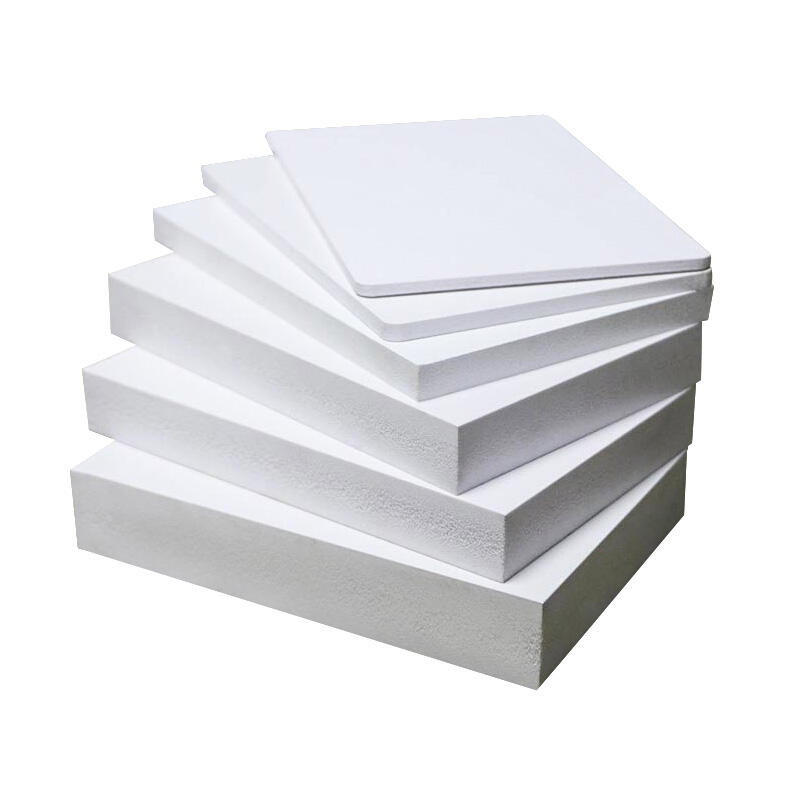
PVC foam board is manufactured by introducing gas into a polyvinyl chloride compound during extrusion, creating a rigid sheet filled with uniformly distributed, sealed air pockets. These trapped air cells are the primary source of the material's thermal resistance. Because PVC foam board combines the structural rigidity of solid PVC with the insulating air matrix of foam, it delivers a performance profile that plain solid plastic sheets simply cannot match. This article examines the thermal insulation characteristics of PVC foam board in detail, covering its physical basis, practical performance, and the conditions under which PVC foam board performs best.
The Physical Basis of Thermal Resistance in PVC Foam Board
How Closed-Cell Structure Limits Heat Transfer
The thermal insulation performance of PVC foam board originates directly from its closed-cell foam architecture. In a closed-cell structure, each gas pocket is completely sealed from its neighbors, which prevents convective airflow within the material. Since convection is one of the three primary mechanisms of heat transfer, eliminating it from within the board significantly reduces the overall rate at which heat moves through PVC foam board from one surface to another. This is a structural advantage that distinguishes PVC foam board from open-cell foams, where air can circulate freely and carry heat through the material more easily.
Conduction is the second heat transfer mechanism relevant to PVC foam board. The PVC polymer matrix itself has a relatively low thermal conductivity compared to metals and many dense engineering plastics. When this low-conductivity matrix is further diluted by the gas-filled cells, the effective thermal conductivity of PVC foam board drops even lower. Typical thermal conductivity values for standard PVC foam board fall in a range that qualifies it as a practical insulating material for partition walls, cladding panels, and equipment enclosures. The lower the thermal conductivity, the better the insulation, and PVC foam board consistently outperforms solid PVC sheet in this respect.
Density, Cell Size, and Their Effect on Insulation
Not all PVC foam board products have identical insulation performance. Density is one of the most critical variables. Lower-density PVC foam board contains a higher proportion of gas cells relative to solid polymer, which generally means better thermal insulation but slightly reduced mechanical strength. Higher-density PVC foam board trades some insulation performance for greater rigidity and surface hardness. Procurement teams specifying PVC foam board for thermally sensitive applications must therefore balance insulation requirements against load-bearing or surface durability demands. Selecting the correct density grade of PVC foam board is essential to achieving the intended thermal outcome.
Practical Thermal Performance in Real Applications
PVC Foam Board in Building Envelope and Partition Systems
In the construction sector, PVC foam board is widely used for interior partition systems, false ceilings, and wall cladding where a degree of thermal separation between zones is desirable. Because PVC foam board is moisture-resistant and dimensionally stable, it does not absorb humidity that could degrade insulation performance over time, unlike certain fibrous insulation materials. In humid climates or in areas such as bathrooms, kitchens, and cold storage facilities, PVC foam board maintains its thermal resistance reliably across years of service. This combination of moisture resistance and stable thermal performance makes PVC foam board especially valuable in environments where conventional insulation boards would deteriorate.
Contractors also favor PVC foam board for its ease of cutting, shaping, and bonding, which allows it to be installed with minimal thermal bridging at joints. Thermal bridging occurs when a more conductive element spans across an insulating layer, creating a shortcut for heat flow. By designing PVC foam board installations with properly sealed edges and joints, building professionals can maintain the full thermal benefit the material offers. PVC foam board is thus not only an insulating material but also a practical one from an installation standpoint.
Industrial and Equipment Applications of PVC Foam Board
Beyond construction, PVC foam board serves as a thermal barrier in a variety of industrial settings. Equipment housings, machine guards, and signage substrates made from PVC foam board benefit from the board's ability to slow heat transfer from external environments to internal components. In exhibition and display contexts, PVC foam board panels help maintain stable temperatures in enclosed display cases. When used in refrigeration or cold-chain infrastructure, PVC foam board contributes to the thermal envelope that keeps energy consumption in check. These applications demonstrate that PVC foam board is a versatile solution across multiple industries, not just the construction market.
Factors That Affect Long-Term Thermal Insulation Performance
Temperature Range and Dimensional Stability
PVC foam board performs well within a defined temperature range. Continuous exposure to temperatures above the material's rated limit can cause gradual softening and cell structure deformation, which reduces thermal resistance over time. Most standard grades of PVC foam board are suitable for applications where temperatures remain within moderate ranges, roughly between negative ten and sixty degrees Celsius, though specific grades vary. For applications at elevated temperatures, specifiers should confirm the heat deflection temperature of the selected PVC foam board grade before finalizing a design. Proper specification prevents premature degradation and ensures consistent insulation performance throughout the product's service life.
Surface Coatings and Assembly Configurations
The way PVC foam board is finished and assembled also influences its effective thermal performance in an installation. Laminating PVC foam board with reflective foil facings can add a radiant barrier function, reducing heat gain from radiant sources such as sunlight or radiated industrial heat. Sandwiching PVC foam board between two dense face sheets creates a composite panel where the board provides the insulating core and the face sheets provide structural support. These assembly strategies allow designers to tailor the overall thermal resistance of a PVC foam board-based system to specific performance targets. The inherent properties of PVC foam board become even more useful when intelligently combined with complementary materials.
FAQ
What is the typical thermal conductivity value of PVC foam board?
The thermal conductivity of PVC foam board typically ranges from approximately 0.03 to 0.05 watts per meter-kelvin depending on density and formulation. This places PVC foam board in the category of moderately effective insulating materials, suitable for many building partition and equipment housing applications where moderate thermal resistance is required.
Can PVC foam board replace dedicated insulation boards in all applications?
PVC foam board is an excellent multifunctional material, but it is not always a direct replacement for high-performance dedicated insulation boards in applications requiring very high R-values. For standard interior partitions, cladding, and equipment enclosures, PVC foam board provides sufficient thermal performance along with its mechanical and moisture-resistant advantages. For extreme thermal insulation requirements, a hybrid approach combining PVC foam board with specialist insulation layers may be more appropriate.
Does moisture affect the thermal insulation performance of PVC foam board over time?
One of the notable advantages of PVC foam board is its low moisture absorption rate. Because the cells are closed and the PVC polymer is inherently hydrophobic, PVC foam board does not absorb significant amounts of water even in humid environments. This means its thermal insulation performance remains stable over long service periods in damp conditions, unlike mineral wool or EPS boards that can experience performance degradation when wet.