 EN
EN

When designers and contractors seek a reliable material for lightweight partition walls, PVC foam sheet consistently stands out as a top-performing choice. Its unique cellular structure combines low mass with impressive rigidity, making it ideally suited for interior wall systems that must be both practical and durable. Understanding how PVC foam sheet achieves this balance helps specifiers make smarter material decisions from the very start of a project.
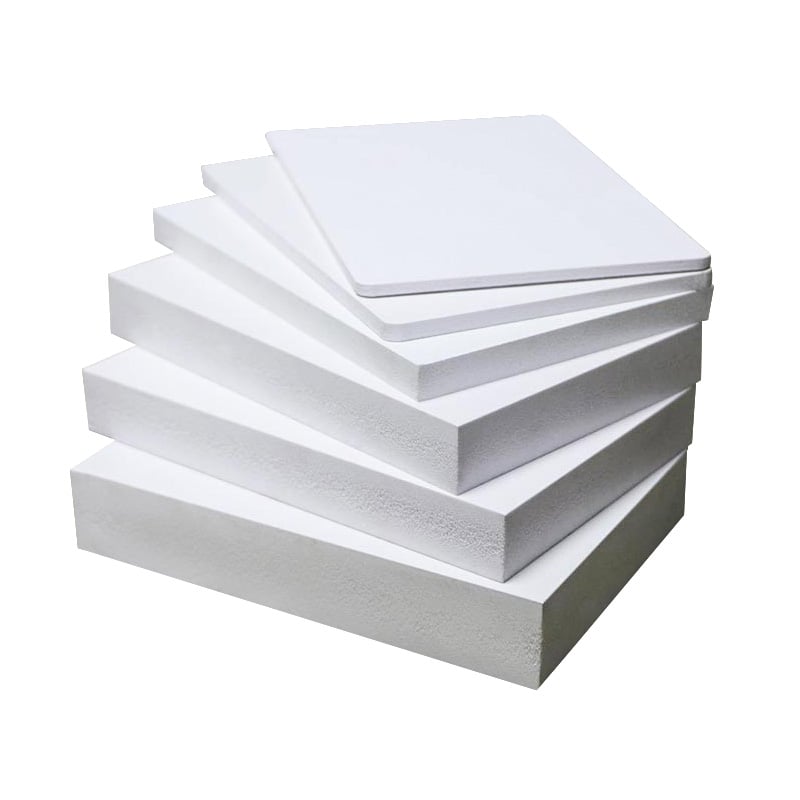
PVC foam sheet is manufactured through a controlled extrusion process that introduces fine gas bubbles into the polyvinyl chloride matrix. The result is a rigid board with a smooth, closed-cell surface and a lightweight foam core. This structure is the foundation of every performance advantage that PVC foam sheet brings to partition wall construction, from reduced structural load to simplified on-site handling and installation.
The Physical Properties That Make PVC Foam Sheet Ideal for Partitions
Low Density Without Sacrificing Structural Integrity
The most immediate contribution of PVC foam sheet to lightweight partition walls is its exceptionally low density. Standard PVC foam sheet grades typically weigh between 0.4 and 0.7 grams per cubic centimeter, which is significantly lighter than gypsum board, cement board, or solid PVC sheet of comparable thickness. This reduced weight means that partition walls built with PVC foam sheet impose far less dead load on floor structures and building frames. In renovation projects or upper-floor commercial fitouts, this load reduction is not just convenient — it is often a structural necessity. Despite its low weight, PVC foam sheet maintains enough rigidity to resist everyday physical impacts, making it a structurally sound choice for office dividers, retail partitions, and residential room separations.
Moisture Resistance and Dimensional Stability
PVC foam sheet does not absorb water, which is a critical property for partition walls in kitchens, bathrooms, clinics, and other humid environments. Unlike gypsum-based boards that can swell, warp, or grow mold when exposed to moisture, PVC foam sheet retains its original dimensions across a wide range of humidity conditions. This dimensional stability means that joints and seams in PVC foam sheet partition walls remain tight over time, reducing the need for repeated maintenance or panel replacement. The closed-cell structure of PVC foam sheet physically blocks moisture ingress, so the board performs consistently whether the environment is dry or persistently damp.
How PVC Foam Sheet Simplifies Partition Wall Fabrication
Easy Cutting, Shaping, and Bonding
One of the most practical contributions of PVC foam sheet to lightweight partition construction is how easily it can be processed on-site. PVC foam sheet can be cut cleanly with standard woodworking saws, utility knives, or CNC routing equipment without generating excessive dust or requiring specialized tooling. Because PVC foam sheet holds a clean edge after cutting, panels can be sized precisely to fit irregular wall dimensions without the crumbling or cracking that sometimes occurs with mineral-based boards. PVC foam sheet also bonds reliably with solvent-based adhesives, PVC cement, and mechanical fasteners such as screws and staples, giving installers multiple joining options depending on the specific partition design. This flexibility in fabrication makes PVC foam sheet a highly adaptable material across different wall framing systems and architectural styles.
Reduced Installation Time and Labor Cost
Because PVC foam sheet is light and easy to handle, a single worker can maneuver and position panels that would require two people if made from heavier materials. This reduction in handling effort directly lowers labor hours per square meter of partition wall installed. PVC foam sheet panels can be pre-cut off-site and transported to the installation location without risk of breakage during transit, further streamlining the construction schedule. The smooth surface of PVC foam sheet also requires minimal preparation before applying paint, laminate, or decorative film finishes, which reduces the total finishing time compared to materials that need extensive sanding, priming, or skim coating before they accept a surface treatment.
Long-Term Performance of PVC Foam Sheet in Partition Applications
Chemical Resistance and Easy Maintenance
PVC foam sheet is inherently resistant to a broad range of chemicals, including cleaning agents, mild acids, and alkalis that are commonly used in commercial and industrial environments. This chemical resistance makes PVC foam sheet partition walls easy to clean and maintain without causing surface degradation. In food processing facilities, laboratories, and medical spaces, PVC foam sheet can be wiped down with disinfectants repeatedly without the surface dulling, flaking, or absorbing contaminants. This hygienic performance is one reason why PVC foam sheet is increasingly specified in environments where cleanliness standards are strictly enforced.
Thermal and Acoustic Contribution
The foam core within PVC foam sheet provides a modest but measurable contribution to thermal insulation within partition walls. The trapped air cells within PVC foam sheet slow the transfer of heat between adjacent spaces, helping to maintain comfortable temperature zones in open-plan offices or retail environments. Additionally, PVC foam sheet absorbs and dampens mid-frequency sound waves better than solid sheet materials of similar thickness. When PVC foam sheet is combined with acoustic insulation infill within a wall cavity, the overall sound reduction performance of the partition increases meaningfully. These combined thermal and acoustic benefits make PVC foam sheet a well-rounded choice for modern interior partition wall systems where comfort and energy efficiency are priorities.
FAQ
What thickness of PVC foam sheet is recommended for partition walls?
For standard interior partition walls, PVC foam sheet in the range of 10 to 18 millimeters thick is most commonly used. Thinner grades of PVC foam sheet around 5 to 8 millimeters are suitable as cladding layers over an existing frame, while thicker PVC foam sheet panels above 18 millimeters may be selected when additional rigidity or impact resistance is required. The right thickness depends on the span between supports, the expected load, and the acoustic performance target for that specific partition.
Can PVC foam sheet be painted or finished like a standard wall surface?
Yes, PVC foam sheet accepts paint, laminate, veneer, and decorative film finishes very well. The smooth closed-cell surface of PVC foam sheet requires only a light scuff sanding and a primer coat before applying latex or oil-based paint. High-pressure laminate and self-adhesive films bond reliably to PVC foam sheet without bubbling or peeling under normal indoor temperature conditions, giving designers significant flexibility in achieving the desired aesthetic for a partition wall.
Is PVC foam sheet fire-safe for use inside buildings?
PVC foam sheet has inherent flame-retardant properties because the chlorine content in the PVC polymer inhibits combustion. Standard PVC foam sheet grades are classified as self-extinguishing, meaning they do not sustain a flame once the ignition source is removed. However, fire safety requirements vary by building type and jurisdiction, so specifiers should always verify that the specific PVC foam sheet grade selected meets the applicable local fire rating standards before using it in partition wall construction.